



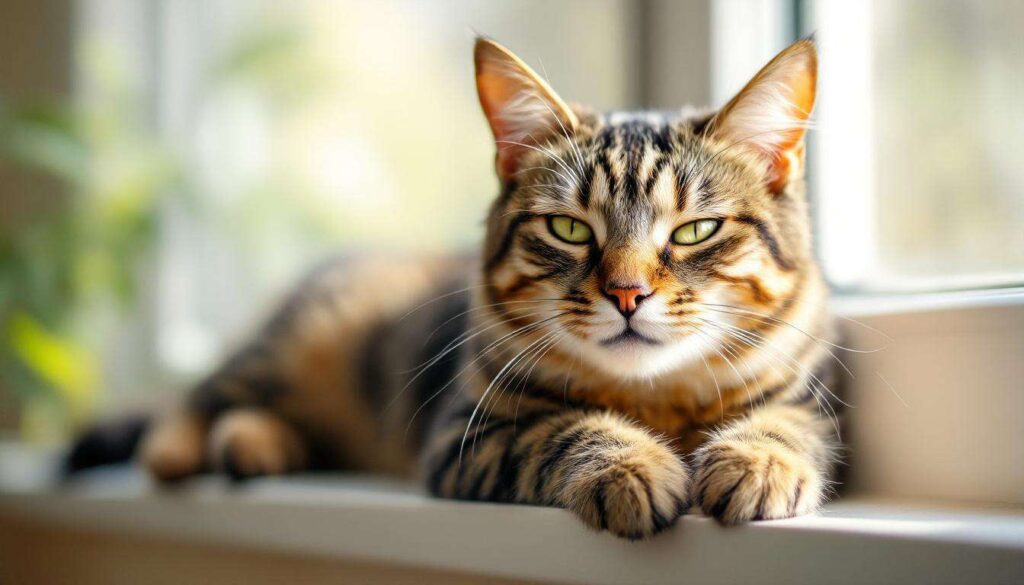
When your cat gazes at you and slowly closes its eyes, you might wonder what this peculiar behavior means. Animal behaviorists have recently confirmed what many cat owners have long suspected: this deliberate, languid blink is your feline companion’s way of expressing love and trust. This simple yet profound gesture represents one of the most significant forms of communication between cats and their human caregivers, revealing the depth of emotional connection these enigmatic creatures are capable of forming.
The significance of slow blinking in cats
Understanding the slow blink mechanism
The slow blink, often called the cat kiss, involves a cat deliberately closing its eyes for several seconds while looking at you. This behavior differs dramatically from normal blinking, which happens rapidly and unconsciously. When a cat performs this gesture, it demonstrates a conscious choice to make itself vulnerable in your presence, as closing the eyes temporarily eliminates visual awareness of potential threats.
Researchers have identified several key characteristics of this behavior:
- The blink lasts significantly longer than a normal blink, typically one to two seconds
- The cat maintains a relaxed facial expression throughout the gesture
- The behavior occurs when the cat feels safe and content
- It is often directed specifically at trusted individuals
The evolutionary context of feline eye contact
In the wild, direct eye contact between cats represents a challenge or threat. Predators and competitors use sustained staring as an intimidation tactic. Consequently, cats evolved to interpret prolonged eye contact as potentially aggressive behavior. The slow blink subverts this instinctive response by deliberately breaking the stare in a non-threatening manner, effectively communicating peaceful intentions and emotional safety.
| Behavior | Meaning | Context |
|---|---|---|
| Direct stare | Challenge or threat | Territorial disputes, hunting |
| Slow blink | Trust and affection | Relaxed social interaction |
| Looking away | Deference or disinterest | Avoiding conflict |
This understanding of feline visual communication provides crucial context for interpreting your cat’s emotional state and strengthening your bond. Scientific research has now moved beyond anecdotal observations to establish concrete evidence of what this behavior truly represents.
Evidence of animal affection
Scientific validation of the slow blink
A groundbreaking study conducted by researchers at the University of Sussex provided empirical evidence that slow blinking represents genuine positive emotion in cats. The research team observed that cats were more likely to approach and interact with humans who slow-blinked at them compared to those who maintained neutral expressions. This suggests that cats not only use this gesture to express affection but also recognize and respond positively to it when humans reciprocate.
The study’s methodology included:
- Controlled experiments with both familiar and unfamiliar humans
- Video analysis of feline facial expressions and body language
- Measurement of approach behavior and interaction duration
- Comparison of responses to slow blinking versus neutral expressions
Physiological indicators of feline contentment
Beyond behavioral observations, researchers have identified physiological markers that accompany the slow blink. When cats engage in this behavior, their bodies exhibit signs of relaxation including decreased heart rate, lowered muscle tension, and reduced cortisol levels. These biological indicators confirm that the slow blink occurs during states of genuine emotional wellbeing rather than stress or anxiety.
Understanding these scientific foundations helps cat owners recognize authentic expressions of affection and distinguish them from other behaviors that might superficially appear similar. The research into feline behavior continues to expand our knowledge of how cats communicate their emotional experiences.
Behavioral studies of felines
Communication patterns in domestic cats
Behavioral scientists have documented that domestic cats have developed specialized communication strategies specifically for interacting with humans. Unlike their wild counterparts, domestic cats vocalize more frequently and have adapted their body language to bridge the communication gap between species. The slow blink represents one of the most sophisticated elements of this adapted communication system.
Comparative analysis with other species
Interestingly, slow blinking as a sign of affection appears relatively unique to felines. Dogs, for instance, express affection through different mechanisms such as tail wagging and physical contact. This species-specific behavior highlights the importance of understanding individual communication systems rather than applying universal interpretations across different animals.
| Species | Primary affection signals | Eye contact behavior |
|---|---|---|
| Cats | Slow blinking, purring, head bunting | Brief, soft gaze with slow blinks |
| Dogs | Tail wagging, licking, leaning | Direct eye contact as bonding |
| Rabbits | Grooming, sitting close, binky jumps | Generally avoid prolonged eye contact |
These behavioral distinctions emphasize why recognizing and responding appropriately to your cat’s slow blink can significantly enhance your relationship. Learning to communicate in your cat’s language creates opportunities for deeper connection.
How to replicate this gesture with your cat
Step-by-step technique for slow blinking
Returning a slow blink to your cat requires patience and proper technique. First, ensure your cat is in a relaxed state and looking at you. Make gentle eye contact without staring intensely, then slowly close your eyes for one to two seconds before gradually reopening them. Maintain a calm demeanor throughout the process, as any tension in your body language may undermine the gesture’s intended meaning.
Key elements for successful slow blinking:
- Choose moments when your cat appears relaxed and receptive
- Keep your facial muscles soft and avoid rigid expressions
- Close your eyes smoothly rather than squeezing them shut
- Allow natural pauses between blinks rather than repeating rapidly
- Observe your cat’s response and adjust accordingly
Building trust through consistent practice
Incorporating slow blinking into your daily interactions can strengthen your bond with your cat over time. Consistency matters more than frequency; a few genuine slow blinks during quality time together prove more effective than numerous mechanical attempts throughout the day. Pay attention to your cat’s reactions and respect their boundaries if they seem uninterested or uncomfortable with the interaction.
While slow blinking represents a powerful communication tool, cats express affection through numerous other behaviors that deserve equal recognition and understanding.
Other signs of affection in cats
Physical expressions of feline love
Cats demonstrate affection through various tactile behaviors beyond slow blinking. Head bunting, where a cat presses its forehead against you, marks you with scent glands and claims you as part of their social group. Kneading with their paws, a behavior retained from kittenhood, indicates deep contentment and security. When your cat exposes its belly, this vulnerable position signals profound trust, though it doesn’t necessarily invite touching.
Vocal and behavioral indicators
Purring represents the most recognized sign of feline contentment, though cats also purr in other contexts including stress. Chirping or trilling sounds specifically directed at you indicate friendly greeting behavior. Additionally, cats show affection by following you between rooms, sleeping near you, and bringing you “gifts” such as toys or prey items.
- Tail held high with a slight curve at the tip signals happiness
- Grooming your hair or skin demonstrates social bonding
- Sitting with their back to you shows trust in your protection
- Rubbing against your legs marks you with their scent
Recognizing this diverse repertoire of affectionate behaviors helps you appreciate the full spectrum of your cat’s emotional expression. These interactions contribute significantly to your cat’s overall psychological health.
The importance of interaction for cats’ well-being
Psychological benefits of human-cat bonding
Regular positive interactions, including slow blinking exchanges, provide essential mental stimulation for domestic cats. These social connections reduce stress, prevent behavioral problems, and contribute to overall life satisfaction. Cats who receive consistent, appropriate attention from their caregivers demonstrate lower anxiety levels and fewer destructive behaviors than those with limited social engagement.
Creating enriching environments
Beyond direct interaction, cats benefit from environments that support their natural behaviors and provide opportunities for both independence and connection. Offering elevated perches, hiding spaces, and interactive toys complements social bonding activities. Understanding your cat’s communication signals, particularly affectionate gestures like slow blinking, enables you to respond appropriately to their emotional needs and create a harmonious living situation.
| Interaction type | Frequency recommendation | Benefits |
|---|---|---|
| Slow blinking exchanges | Multiple times daily | Emotional bonding, stress reduction |
| Interactive play sessions | 15-30 minutes daily | Physical exercise, mental stimulation |
| Grooming and petting | As cat tolerates | Physical health, social connection |
The slow blink represents more than a charming quirk of feline behavior. Scientific research confirms that this deliberate gesture communicates genuine affection and trust, offering cat owners a powerful tool for strengthening their relationships with their pets. By understanding and reciprocating this behavior, along with recognizing other signs of feline affection, you create deeper connections that enhance both your life and your cat’s wellbeing. The simple act of slowly closing your eyes in response to your cat’s loving gaze acknowledges their emotional expression and reinforces the bond you share, proving that sometimes the most meaningful communication requires no words at all.