



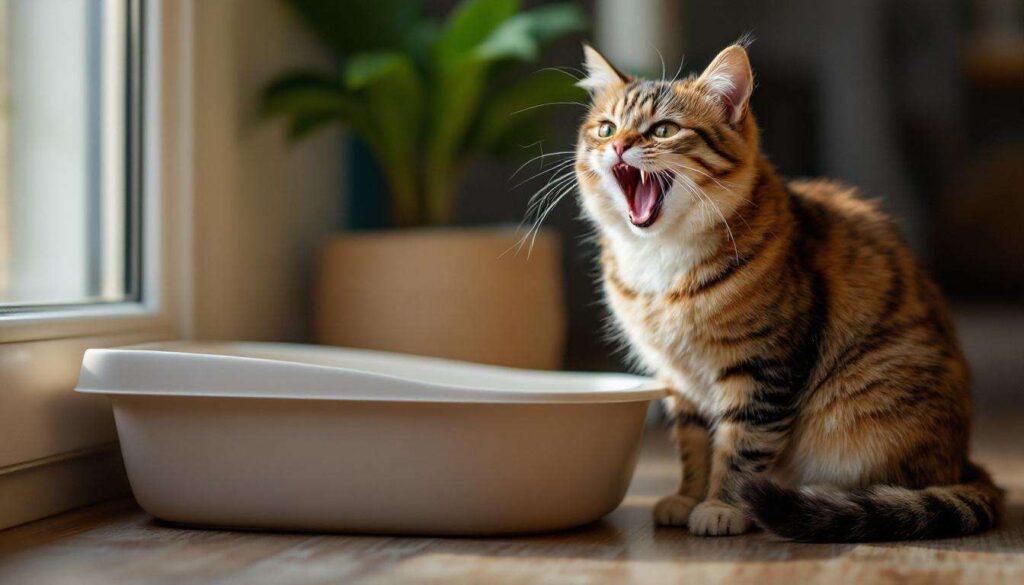
Cats are fascinating creatures with complex communication patterns, and when they suddenly start meowing loudly near their litter tray, it often signals something important. This behavior, which can seem puzzling to pet owners, typically stems from specific concerns that deserve attention. Whether it’s a medical issue, environmental stress, or simply a feline attempt to communicate a need, understanding the root cause is essential for maintaining your cat’s wellbeing and household harmony.
Understanding cat behavior: why do they meow near the litter tray ?
The basics of feline vocalization patterns
Cats use meowing primarily to communicate with humans rather than with other cats. When your feline companion vocalizes near the litter tray, they’re attempting to convey a specific message. This behavior isn’t random but rather a deliberate form of communication that requires interpretation.
The location of the meowing is particularly significant. When cats vocalize in the area where they eliminate, it often indicates discomfort, dissatisfaction, or a need for attention related to their bathroom habits. Understanding this connection helps pet owners identify potential problems before they escalate.
Common triggers for litter tray vocalization
Several factors can prompt a cat to meow loudly near their litter tray:
- Physical discomfort during urination or defecation
- Dissatisfaction with litter cleanliness or type
- Territorial concerns or anxiety about the litter location
- Attention-seeking behavior related to bathroom routines
- Previous negative experiences associated with the litter tray
These triggers often overlap, making it crucial to observe your cat’s overall behavior patterns rather than focusing solely on the vocalization itself. The intensity, frequency, and timing of the meowing provide valuable clues about the underlying cause.
This understanding of basic feline communication sets the stage for examining how environmental stressors might contribute to this vocal behavior.
Signs of stress in cats: is the litter to blame ?
Environmental factors affecting litter tray usage
Cats are highly sensitive to their environment, and changes in their litter setup can trigger significant stress. The type of litter, its scent, texture, and depth all play crucial roles in whether a cat feels comfortable using their tray. Some cats develop strong preferences and will vocalize their displeasure when these preferences aren’t met.
Location matters tremendously. A litter tray placed in a high-traffic area, near loud appliances, or in a space that feels unsafe can cause anxiety. Cats need privacy and security when eliminating, and lack of these conditions often results in vocal protests.
Cleanliness standards and feline expectations
Cats are naturally fastidious animals with high cleanliness standards. A dirty litter tray is one of the most common reasons for vocal complaints. The frequency of cleaning, the number of trays available, and the thoroughness of maintenance all impact your cat’s satisfaction level.
| Number of Cats | Recommended Litter Trays | Daily Cleaning Frequency |
|---|---|---|
| 1 | 2 | At least once |
| 2 | 3 | Twice daily |
| 3+ | 4+ | Multiple times daily |
The general rule suggests having one litter tray per cat plus one extra. Failure to meet these standards can result in vocal protests and potentially lead to elimination outside the tray.
While environmental stress plays a significant role, medical issues can also manifest through similar vocal behaviors near the litter tray.
Health problems related to the litter: a factor to consider
Urinary tract issues and painful elimination
One of the most serious reasons cats meow near their litter tray involves urinary tract problems. Conditions such as urinary tract infections, bladder stones, or feline idiopathic cystitis cause significant discomfort during urination. Cats often vocalize before, during, or after attempting to urinate because they associate the litter tray with pain.
Warning signs accompanying these vocalizations include:
- Frequent trips to the litter tray with little or no urine production
- Straining or crying while attempting to urinate
- Blood in the urine
- Excessive licking of the genital area
- Urinating outside the litter tray
Digestive disorders and constipation
Gastrointestinal issues can also cause vocal distress near the litter tray. Constipation, inflammatory bowel disease, or intestinal blockages make defecation painful or difficult. Cats may meow loudly to express their discomfort or to alert their owners that something is wrong.
Constipated cats often spend extended periods in the litter tray, straining without producing results. This frustrating experience leads to increased vocalization as they attempt to communicate their distress. Dietary factors, dehydration, or underlying medical conditions can all contribute to these problems.
Beyond physical health concerns, the way cats use vocalization as a communication tool deserves closer examination.
The vocal language of cats: a form of communication
Attention-seeking behavior patterns
Sometimes, cats meow near the litter tray simply because they’ve learned it gets results. If a cat previously meowed due to a legitimate concern and received immediate attention, they may repeat this behavior to gain interaction, even when no problem exists. This learned behavior becomes reinforced each time an owner responds.
Cats are intelligent observers of human behavior. They quickly identify which actions prompt responses and may strategically vocalize in areas they know will capture attention. The litter tray location often guarantees a reaction because owners naturally worry about elimination issues.
Announcing bathroom activities
Some cats develop the habit of announcing their litter tray usage as a normal part of their routine. This behavior, while potentially annoying, isn’t necessarily problematic. Certain cats simply vocalize before or after using their tray, similar to how they might meow before meals or when greeting their owners.
This communicative pattern may stem from:
- Kittenhood habits carried into adulthood
- A desire to inform household members of their activities
- Territorial marking through both scent and sound
- Seeking reassurance or companionship during vulnerable moments
Understanding these communication patterns helps owners determine whether intervention is necessary or if the behavior is simply part of their cat’s personality.
Solutions and tips to soothe your cat
Optimizing the litter tray environment
Creating an ideal litter tray setup addresses many causes of vocal behavior. Start by ensuring the tray is appropriately sized, with enough space for your cat to turn around comfortably. The litter depth should be between two to three inches, allowing for natural digging behavior without being overwhelming.
Experiment with different litter types if your cat seems dissatisfied. Options include:
- Clumping clay litter
- Non-clumping clay litter
- Silica gel crystals
- Natural alternatives like corn, wheat, or wood-based products
- Unscented varieties for sensitive cats
Place litter trays in quiet, accessible locations away from food and water bowls. Provide multiple trays in multi-level homes to ensure easy access regardless of where your cat spends time.
Establishing consistent cleaning routines
Maintaining rigorous cleaning standards prevents many litter-related complaints. Scoop waste at least once daily, preferably twice for multiple-cat households. Completely empty and wash the tray weekly using mild, unscented soap, as strong chemicals can deter cats from using the tray.
Replace litter entirely during weekly cleanings rather than simply topping off. This practice prevents odor buildup and maintains freshness that meets feline standards.
Reducing stress and anxiety
If environmental stress contributes to the vocalization, implement calming strategies such as:
- Providing vertical spaces and hiding spots near the litter area
- Using feline pheromone diffusers to create a calming atmosphere
- Maintaining consistent household routines
- Gradually introducing any necessary changes to minimize disruption
- Ensuring adequate play and mental stimulation throughout the day
While these solutions address many common causes, certain situations require professional veterinary assessment.
When to consult a vet ? Signs to watch for
Urgent symptoms requiring immediate attention
Certain signs accompanying litter tray vocalization indicate medical emergencies requiring prompt veterinary care. Male cats showing signs of urinary blockage face life-threatening situations that demand immediate intervention. Complete inability to urinate can cause kidney failure and death within 24 to 48 hours.
Seek emergency veterinary care if you observe:
- Repeated attempts to urinate with no urine production
- Crying or howling in obvious pain
- Lethargy, weakness, or loss of appetite
- Vomiting alongside litter tray issues
- Visible blood in urine or stool
- Distended or painful abdomen
Non-emergency concerns warranting veterinary consultation
Even without emergency symptoms, persistent vocal behavior near the litter tray justifies a veterinary examination. Schedule an appointment if the meowing continues for more than a few days despite environmental improvements, or if you notice subtle changes in elimination patterns.
A thorough veterinary examination typically includes urinalysis, blood work, and possibly imaging to identify underlying health issues. Early detection of problems like urinary crystals, infections, or digestive disorders leads to better treatment outcomes and prevents complications.
Regular wellness examinations help catch potential problems before they manifest as behavioral changes. Senior cats particularly benefit from biannual checkups, as age-related conditions often affect elimination comfort and frequency.
Loud meowing near the litter tray serves as your cat’s way of communicating that something requires attention. Whether the cause stems from medical issues like urinary tract infections, environmental factors such as litter cleanliness, or simple communication preferences, addressing the behavior promptly ensures your cat’s comfort and health. By maintaining optimal litter conditions, recognizing stress signals, and knowing when professional veterinary care is necessary, you can effectively respond to your cat’s needs and restore peaceful bathroom routines.