



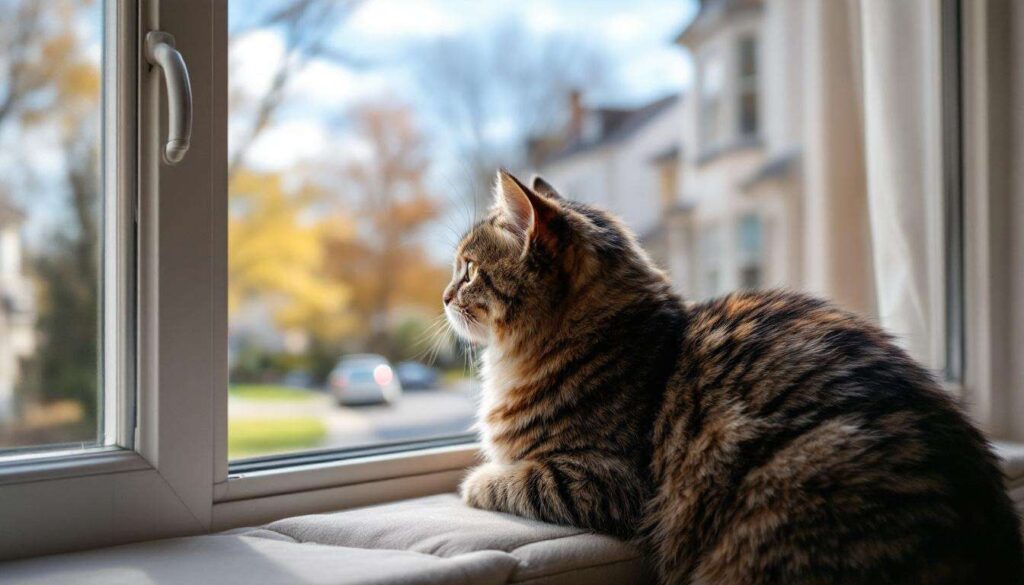
Many cat owners notice their feline companions spending considerable time gazing through windows, seemingly captivated by the world beyond the glass. This behavior, far from being unusual or concerning, represents a complex interplay of instinct, psychology, and environmental stimulation. Feline psychologists and animal behaviorists have identified multiple factors that explain why indoor cats dedicate hours to window observation, revealing insights into their mental needs and evolutionary heritage.
Understanding the hunting instinct of indoor cats
The predatory nature remains intact
Despite generations of domestication, indoor cats retain the powerful hunting instincts of their wild ancestors. Window watching serves as a substitute for the stalking and tracking behaviors that outdoor cats regularly exercise. When your cat stares intently at birds, squirrels, or even moving leaves, they’re engaging their predatory programming without the need to actually hunt for survival.
This instinctive behavior manifests through several observable actions:
- Tail twitching and body tensing when spotting potential prey
- Chattering or making distinctive clicking sounds at birds
- Dilated pupils indicating heightened focus and excitement
- Crouching positions mimicking stalking postures
Mental exercise through observation
Window watching provides crucial mental stimulation that indoor cats would otherwise obtain through hunting activities. Feline psychologists emphasize that this observational behavior activates the same neural pathways involved in actual hunting. The cat’s brain processes movement patterns, calculates distances, and strategizes potential approaches, all while safely positioned indoors. This cognitive engagement helps prevent boredom and associated behavioral problems that can develop in under-stimulated indoor cats.
| Hunting Behavior | Window Observation Equivalent |
|---|---|
| Tracking prey movement | Following birds or insects visually |
| Calculating pounce timing | Anticipating movement patterns |
| Stalking approach | Body positioning and focus |
Beyond satisfying hunting instincts, this activity connects to broader needs for sensory engagement that windows uniquely provide.
The importance of visual stimulation
Cats as visual creatures
Feline vision evolved specifically for detecting movement and hunting in varied light conditions. Windows offer a constantly changing visual landscape that captivates cats far more effectively than static indoor environments. The movement of clouds, swaying branches, passing vehicles, and wildlife creates an ever-shifting panorama that engages their motion-sensitive vision.
Research indicates that cats perceive motion differently than humans, with enhanced ability to detect subtle movements at greater distances. This evolutionary adaptation makes window watching particularly rewarding, as even minor environmental changes capture their attention and provide entertainment.
Preventing sensory deprivation
Indoor environments can become monotonous for cats lacking adequate stimulation. Window access serves as a critical countermeasure against sensory deprivation, which can lead to:
- Depression and lethargy
- Destructive behaviors like excessive scratching
- Attention-seeking aggression
- Compulsive grooming or other repetitive behaviors
Animal behaviorists recommend ensuring cats have regular access to windows as part of comprehensive environmental enrichment strategies. The visual complexity available through windows provides natural, self-directed entertainment that requires no human intervention while delivering significant psychological benefits.
These visual experiences contribute to deeper psychological advantages that extend beyond momentary entertainment.
The psychological benefits for the cat
Stress reduction and emotional regulation
Window watching functions as a form of meditation for cats, according to feline psychologists. The focused attention required to observe outdoor activity creates a calming effect similar to mindfulness practices. This concentrated observation helps cats regulate emotions and manage stress that might accumulate from living in confined indoor spaces. The predictable yet varied nature of outdoor scenes provides comfort while maintaining interest.
Territorial monitoring behavior
Cats are inherently territorial animals, and windows allow them to monitor their perceived territory boundaries. This surveillance behavior fulfills important psychological needs related to security and control. By observing the outdoor environment, cats assess potential threats, track familiar animals passing through their visual territory, and maintain awareness of their surroundings.
| Psychological Need | Window Watching Benefit |
|---|---|
| Security | Monitoring for potential threats |
| Control | Surveying territorial boundaries |
| Stimulation | Engaging with dynamic environment |
| Comfort | Establishing predictable routines |
Building daily routines
Many cats develop ritualized window-watching schedules that coincide with peak outdoor activity times. These routines provide structure and predictability that contribute to emotional stability. Morning bird activity, afternoon squirrel movements, and evening human traffic patterns become anticipated events that organize the cat’s day and provide regular stimulation intervals.
The specific characteristics of what cats observe outdoors significantly influence the intensity and duration of their window-watching sessions.
Influence of the outdoor environment
Seasonal variations in interest
Outdoor activity levels directly correlate with window-watching duration. Spring and summer typically generate the most sustained interest due to increased wildlife activity, longer daylight hours, and more frequent human movement. Cats often spend considerably more time at windows during these seasons compared to winter months when outdoor activity diminishes.
Seasonal factors affecting window interest include:
- Bird migration patterns and nesting activities
- Increased insect presence during warmer months
- Neighborhood pet walking schedules
- Vegetation movement from seasonal weather patterns
Urban versus rural viewing experiences
The type of environment visible from windows significantly impacts cat behavior. Urban settings provide frequent human and vehicle movement, offering consistent visual stimulation but less wildlife interaction. Rural or suburban environments typically present more natural wildlife viewing opportunities that more closely trigger hunting instincts.
| Environment Type | Primary Attractions | Typical Engagement Level |
|---|---|---|
| Urban | Pedestrians, vehicles, pigeons | Moderate, consistent |
| Suburban | Varied wildlife, neighbors | High, variable |
| Rural | Natural wildlife, livestock | Very high, seasonal |
Weather impacts on behavior
Weather conditions dramatically alter window-watching patterns. Rainy days often increase viewing time as indoor cats watch water movement and observe how other animals respond to precipitation. Windy conditions create enhanced movement in vegetation and debris, providing additional visual interest. Conversely, extreme weather may reduce outdoor activity, potentially decreasing cat interest.
Understanding these environmental influences helps cat owners optimize their pets’ viewing experiences through strategic enhancements.
How to enrich your cat’s window-watching experience
Creating optimal viewing stations
Strategic placement of cat furniture maximizes window benefits. Cat trees, perches, or shelves positioned at window height allow comfortable, sustained observation. Consider these enhancement strategies:
- Install sturdy window perches that support your cat’s weight
- Position furniture to provide multiple viewing angles
- Ensure stable surfaces that won’t shift during use
- Create elevated options for cats who prefer height advantage
Attracting wildlife to viewing areas
Bird feeders strategically placed outside windows dramatically increase entertainment value. Position feeders within clear view but at safe distances that prevent window strikes by birds. Squirrel-proof feeders maintain consistent bird activity, while varied seed types attract diverse species, providing changing visual interest throughout the day.
Managing window access safely
Safety considerations ensure positive experiences without risks. Secure screens prevent accidental falls from open windows, particularly in multi-story residences. Window film applications can reduce glare while maintaining visibility, and ensuring windows remain clean maximizes visual clarity for your cat’s viewing pleasure.
| Enhancement | Primary Benefit | Implementation Difficulty |
|---|---|---|
| Window perch | Comfortable viewing position | Low |
| Bird feeder | Increased wildlife activity | Low |
| Cat TV videos | Supplemental stimulation | Very low |
| Multiple window access | Varied viewing opportunities | Moderate |
Supplementing with technology
Digital enrichment complements natural window watching during low outdoor activity periods. Specially designed cat entertainment videos featuring birds, fish, and small animals provide alternative stimulation. However, feline psychologists emphasize that these should supplement rather than replace real window observation, as authentic environmental interaction offers superior psychological benefits.
Conclusion: your cat’s well-being at the window
Window watching represents far more than idle pastime for indoor cats. This behavior fulfills deep-seated hunting instincts, provides essential mental stimulation, and delivers significant psychological benefits including stress reduction and territorial monitoring. The outdoor environment’s influence varies by season, location, and weather conditions, all affecting engagement levels. By understanding these factors and implementing strategic enhancements like optimal perch placement and wildlife attraction, cat owners can significantly improve their pets’ quality of life. Recognizing window watching as a legitimate need rather than simple curiosity allows owners to support their cats’ emotional health through this natural, self-directed enrichment activity that connects indoor felines with their evolutionary heritage.