



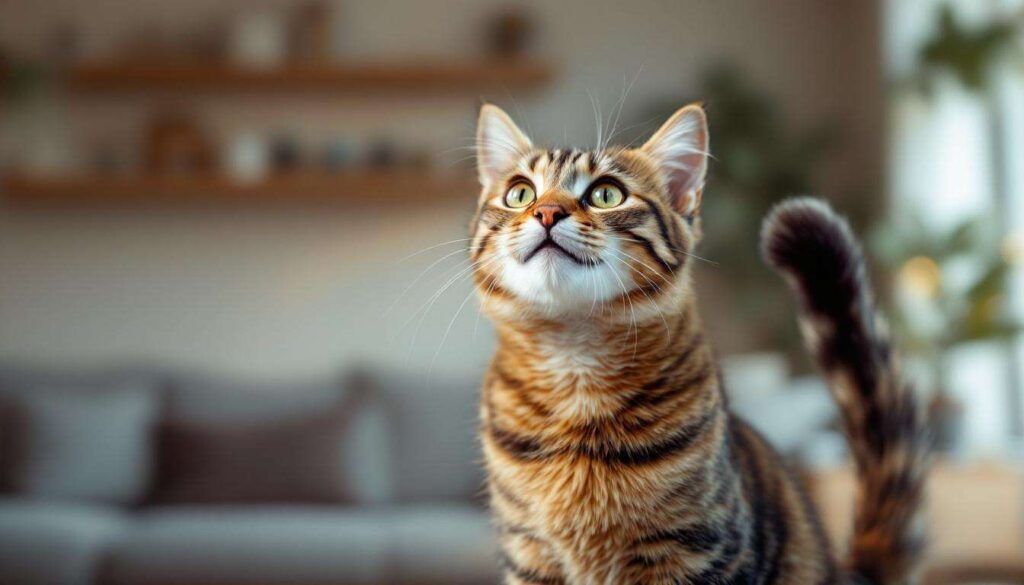
Cat owners often believe they understand their feline companions, yet one of the most common gestures remains widely misinterpreted. When a cat raises its tail during petting, many people assume this indicates pure contentment or a simple request for more attention. However, veterinary behaviorists and feline experts reveal that this gesture carries a far more nuanced message than most realize. Understanding what your cat truly communicates through tail elevation can transform your relationship and prevent misunderstandings that lead to scratches, bites, or stressed pets. The raised tail represents a complex signal rooted in evolutionary behavior and social communication that deserves closer examination.
The reasons behind the cat’s tail movement
Cats rely heavily on non-verbal communication to express their emotional states and intentions. The tail serves as one of the most visible and expressive tools in their behavioral repertoire. Unlike dogs, whose tail wagging patterns are relatively straightforward, feline tail movements operate within a more sophisticated system of signals.
Evolutionary origins of tail communication
The domestic cat’s tail communication evolved from wild ancestors who needed silent methods to convey information without alerting prey or predators. In feral cat colonies, tail positions help establish hierarchy, signal availability for social interaction, and communicate emotional states without vocalizations. This evolutionary background explains why tail language remains so integral to how cats interact with both humans and other animals.
Neurological control of tail movements
The feline tail contains approximately 20 caudal vertebrae controlled by numerous muscles that allow for precise movements. Cats possess voluntary control over these movements, but many tail positions also occur as involuntary responses to emotional stimuli. This combination of conscious and unconscious control makes tail reading both reliable and complex, as some movements reflect deliberate communication while others reveal unfiltered emotional reactions.
Understanding these foundational aspects of tail communication sets the stage for interpreting specific positions and their meanings.
The different tail positions and their meanings
Feline tail positions create a visual vocabulary that conveys distinct messages. Recognizing these variations helps owners respond appropriately to their cat’s needs and emotional states.
Common tail positions decoded
| Tail Position | Primary Meaning | Context Clues |
|---|---|---|
| Vertical and straight | Greeting, confidence | Relaxed body, forward ears |
| Vertical with curved tip | Friendly interest | Slow approach, soft eyes |
| Low or tucked | Fear, submission | Crouched body, flattened ears |
| Puffed up | Extreme fear or aggression | Arched back, sideways stance |
| Thrashing or lashing | Irritation, overstimulation | Tense muscles, dilated pupils |
The misunderstood raised tail during petting
When a cat raises its tail while being petted, most owners interpret this as unreserved pleasure. However, this gesture often signals something more specific: the cat is presenting its anal glands for identification. In feline social behavior, this represents a greeting ritual where cats share scent information. Your cat essentially treats you as another cat, offering the most intimate form of recognition and acceptance within their social framework.
- The raised tail exposes scent glands for social bonding
- This behavior mimics kitten-mother interactions
- It indicates the cat views you as part of their family group
- The gesture may request reciprocal grooming or attention
This nuanced understanding reveals why the raised tail carries deeper significance than simple contentment.
When the cat raises its tail: sign of trust
The vertical tail position during petting sessions represents one of the highest compliments a cat can offer. This gesture demonstrates profound trust and social acceptance that extends beyond basic tolerance.
Trust indicators accompanying the raised tail
A genuinely trusting cat combines the raised tail with several other behavioral markers. The eyes remain soft and partially closed, often exhibiting the slow blink that feline behaviorists recognize as a sign of affection. The body stays relaxed rather than tense, and the cat may lean into your touch or knead with their paws. Purring frequently accompanies this constellation of behaviors, creating an unmistakable picture of a cat that feels secure in your presence.
The vulnerability factor
Raising the tail exposes the cat’s most vulnerable areas, including the hindquarters and anal region. In the wild, such exposure would present significant risk. When a domestic cat voluntarily assumes this position during human interaction, they demonstrate complete confidence that you pose no threat. This behavior particularly impresses when considering that cats are both predators and prey animals, constantly balancing assertiveness with caution.
Recognizing this trust signal helps owners appreciate their cat’s emotional investment in the relationship, though environmental factors also shape how these signals manifest.
The importance of the environment in cat body language
Context dramatically influences how cats express themselves through body language. The same tail position may carry different meanings depending on surrounding circumstances and environmental stressors.
Environmental factors affecting tail signals
- Presence of other animals: Multi-pet households create competition for resources and attention, potentially making tail signals more defensive or territorial
- Noise levels: Loud environments may cause stress that alters typical body language patterns
- Recent changes: Moving homes, new furniture, or schedule disruptions can make cats more cautious in their communications
- Health status: Pain or illness may prevent normal tail movements or create unusual positions
Reading context alongside body language
Skilled cat owners learn to interpret tail positions within their broader context. A raised tail during quiet evening cuddles carries different weight than the same position when the doorbell rings or during feeding time. The situational awareness separates superficial observation from genuine understanding of feline communication. Paying attention to what preceded the tail raise, what other body parts communicate, and how the cat responds to your reaction provides crucial interpretive information.
This contextual understanding naturally leads to questions about appropriate human responses to feline signals.
How to react when your cat raises its tail
Appropriate responses to a raised tail strengthen the human-feline bond and encourage continued trust-based communication.
Recommended responses
When your cat raises its tail during petting, continue with gentle, consistent strokes in areas the cat has previously enjoyed. Many cats appreciate scratches at the base of the tail or along the spine. However, avoid suddenly changing your petting pattern or intensity, as this may startle the cat or break the moment of connection. Some cats enjoy verbal acknowledgment in soft tones, while others prefer quiet companionship.
What to avoid
Several common reactions can undermine the trust your cat demonstrates through tail raising:
- Abruptly stopping all interaction, which may confuse the cat
- Becoming overly enthusiastic or increasing petting intensity
- Touching the tail itself, which many cats find uncomfortable
- Forcing continued interaction when other signals indicate the cat wants space
- Calling others over to observe, potentially overwhelming the cat
Recognizing when to stop
Even during positive interactions, cats have stimulation thresholds that vary by individual. Watch for subtle signs that petting should conclude: ears rotating backward, skin rippling along the back, tail beginning to twitch, or the cat’s gaze becoming fixed and intense. Respecting these boundaries maintains trust and prevents the interaction from deteriorating into overstimulation aggression.
Building on these response strategies, owners can develop broader skills for interpreting their cat’s complete communication system.
Tips for better understanding feline body language
Developing fluency in cat body language requires observation, patience, and willingness to learn your individual cat’s unique expressions.
Observation techniques
Dedicate time to simply watching your cat without interaction. Notice how tail positions change throughout the day, correlate movements with specific activities, and identify patterns in your cat’s communication. Video recording can reveal subtle signals you might miss in real-time. Create a body language journal documenting your cat’s typical expressions in various situations, which helps establish baseline behaviors for comparison.
Learning from multiple signals
Never interpret tail position in isolation. Comprehensive understanding requires synthesizing information from:
- Ear position and orientation
- Pupil dilation
- Whisker direction
- Vocal sounds
- Body posture and muscle tension
- Movement speed and direction
Resources for continued learning
Numerous resources support ongoing education in feline behavior. Veterinary behaviorists offer consultations for particularly puzzling communication patterns. Books by certified cat behavior consultants provide research-based insights. Online courses from organizations like the International Association of Animal Behavior Consultants deliver structured learning. Local animal shelters often host workshops on cat body language that provide hands-on practice with diverse feline personalities.
Most cat owners underestimate the complexity of feline communication, particularly regarding tail signals during petting. The raised tail represents far more than simple contentment, serving as a profound gesture of trust rooted in evolutionary scent-sharing behaviors. This signal indicates your cat views you as family and feels secure enough to display vulnerability. Environmental context shapes how these signals manifest, requiring owners to interpret body language within broader circumstances. Appropriate responses that respect boundaries while acknowledging the cat’s communication strengthen bonds and encourage continued trust. By observing multiple body language signals simultaneously and committing to ongoing learning, owners can develop genuine fluency in understanding their feline companions and responding to their nuanced emotional needs.