



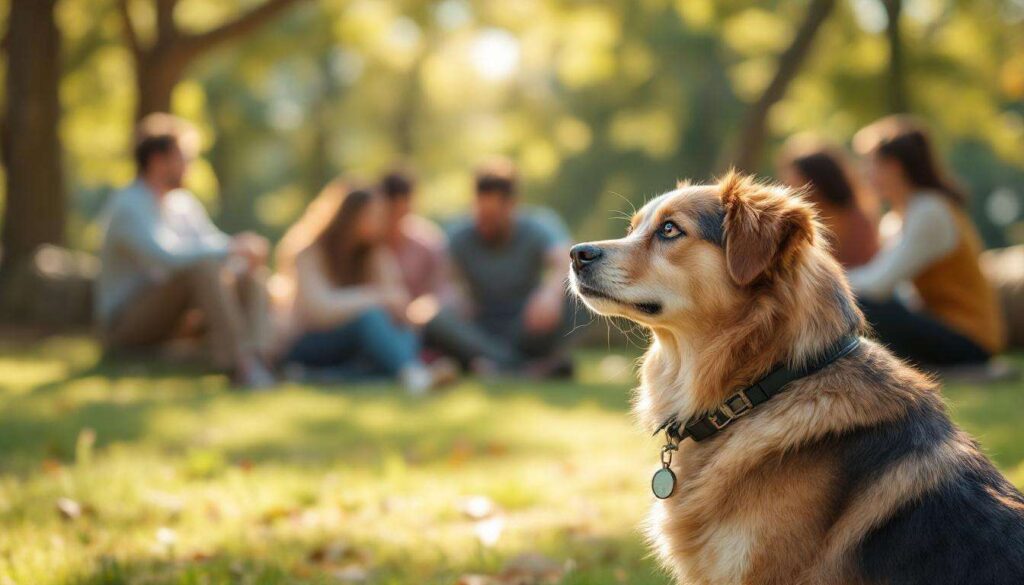
Dogs have long been considered humanity’s most loyal companions, but their ability to judge human character may extend far beyond simple affection. Recent scientific research has revealed that our canine friends possess an extraordinary capacity to detect untrustworthy individuals within mere seconds of encountering them. This remarkable skill, rooted in millions of years of evolutionary development and refined through thousands of years of domestication, demonstrates that dogs are not merely responding to basic commands or seeking treats. They are actively evaluating the people around them, making split-second judgments about trustworthiness that often prove remarkably accurate. A groundbreaking study conducted by researchers at Kyoto University has shed new light on this phenomenon, providing concrete evidence of dogs’ ability to assess human reliability through careful observation of social interactions.
Dogs, masters of intuition ?
The evolutionary foundation of canine perception
The relationship between humans and dogs spans approximately 15,000 to 40,000 years, creating a unique bond that has shaped both species. Throughout this extended period of cohabitation, dogs have developed sophisticated social cognition skills that allow them to interpret human behavior with remarkable precision. This evolutionary partnership has equipped dogs with the ability to read facial expressions, body language, and vocal tones in ways that few other animals can match.
Dogs possess what scientists call social referencing abilities, meaning they observe how humans interact with one another and use this information to form judgments. This capacity goes beyond simple conditioning or learned responses. It represents a complex cognitive process that involves:
- Observing human-to-human interactions
- Processing emotional cues and body language
- Storing information about specific individuals
- Making predictions about future behavior based on past observations
- Adjusting their own behavior accordingly
Intuition versus learned behavior
The debate between innate intuition and learned behavior has fascinated researchers for decades. While some argue that dogs simply respond to subtle cues they have been trained to recognize, mounting evidence suggests a more nuanced explanation. Dogs appear to possess an inherent capacity to evaluate trustworthiness that transcends basic training, combining instinctive responses with learned experiences to create a comprehensive assessment system.
This sophisticated evaluation process allows dogs to distinguish between genuine threats and harmless strangers, between reliable caregivers and unreliable individuals. Their assessments often occur so rapidly that they appear almost instantaneous, leading many to describe this ability as intuitive rather than analytical. Understanding how dogs process these complex social signals provides valuable insights into the mechanisms underlying this seemingly intuitive behavior.
The exceptional sensory abilities of dogs
Superior olfactory capabilities
Dogs possess an olfactory system that is approximately 10,000 to 100,000 times more sensitive than that of humans. This extraordinary sense of smell allows them to detect chemical changes in human bodies that occur during emotional states such as fear, anxiety, or dishonesty. When humans experience stress or engage in deceptive behavior, their bodies release specific hormones and pheromones that dogs can readily identify.
| Sensory ability | Dogs | Humans |
|---|---|---|
| Olfactory receptors | 300 million | 6 million |
| Brain area devoted to smell analysis | 40 times larger | Standard baseline |
| Detection threshold | Parts per trillion | Parts per million |
Enhanced auditory and visual perception
Beyond their remarkable sense of smell, dogs possess exceptional hearing capabilities that enable them to detect frequencies ranging from 67 Hz to 45,000 Hz, compared to the human range of 64 Hz to 23,000 Hz. This enhanced auditory perception allows dogs to pick up on subtle changes in vocal tone, pitch, and rhythm that may indicate dishonesty or discomfort in human speech patterns.
Their visual acuity, while different from human vision, is particularly adept at detecting movement and reading body language. Dogs can identify micro-expressions and subtle postural shifts that humans might overlook, providing them with additional information about a person’s emotional state and intentions. These combined sensory abilities create a comprehensive perception system that far exceeds human capabilities in many respects.
The groundbreaking study from Kyoto University
Research methodology and participants
The Kyoto University study, conducted by a team of animal behavior researchers, involved 34 dogs and their owners in a carefully controlled experimental setting. The researchers designed a scenario where dogs could observe their owners interacting with two strangers in different contexts. The study employed a pointing paradigm, where the owner would request assistance from strangers, and the strangers would respond either helpfully or unhelpfully.
The experimental design included three distinct conditions:
- A neutral condition where the stranger remained passive
- A helpful condition where the stranger actively assisted the owner
- An unhelpful condition where the stranger refused to help the owner
Key findings and observations
The results proved remarkably consistent and statistically significant. Dogs demonstrated a clear preference for individuals who had been helpful to their owners, while actively avoiding those who had been unhelpful or uncooperative. When offered treats from both the helpful and unhelpful strangers, dogs were significantly more likely to accept food from the person who had previously assisted their owner.
Most striking was the speed of this assessment. Dogs formed these judgments after observing only a single brief interaction, suggesting that their evaluation process operates with remarkable efficiency. The study also revealed that dogs did not simply mirror their owners’ emotional responses but made independent assessments based on their observations of the social exchange. This finding challenges previous assumptions about canine cognition and demonstrates a level of social understanding previously underestimated by researchers.
Behavioral cues in untrustworthy individuals
Physical and chemical signals
Untrustworthy individuals often exhibit physiological responses that dogs can detect through their enhanced sensory systems. These signals include increased cortisol levels, elevated heart rate, and changes in body temperature, all of which produce detectable chemical signatures. When someone behaves dishonestly or harbors negative intentions, their body undergoes subtle stress responses that release specific compounds through sweat and breath.
Dogs can identify these chemical markers with remarkable precision, allowing them to distinguish between genuine friendliness and feigned interest. The autonomic nervous system responses that accompany deception or hostility create a unique olfactory profile that trained canine senses readily recognize. This biological detection system operates below the level of conscious human awareness, making it particularly reliable.
Body language and micro-expressions
Beyond chemical signals, untrustworthy individuals typically display characteristic body language patterns that dogs have learned to recognize through evolutionary adaptation and individual experience. These patterns include:
- Inconsistent facial expressions that don’t match verbal communication
- Tense or rigid posture indicating discomfort or aggressive intent
- Avoidance of direct eye contact or excessive staring
- Nervous gestures such as fidgeting or excessive movement
- Incongruent vocal tones that contradict the spoken message
Dogs excel at detecting these micro-expressions and subtle behavioral inconsistencies that often escape human notice. Their ability to process multiple sensory inputs simultaneously creates a comprehensive picture of an individual’s trustworthiness, allowing them to make rapid assessments that inform their subsequent behavior and reactions.
How dogs swiftly assess human trustworthiness
The cognitive processing timeline
Research indicates that dogs can form initial trustworthiness assessments in as little as 30 seconds to two minutes of observation. This rapid evaluation process involves multiple stages of information gathering and processing. First, dogs collect sensory data through smell, sight, and sound. Next, they compare this information against stored memories of previous encounters and innate behavioral templates. Finally, they formulate a response based on this comprehensive analysis.
The neural pathways involved in this process are remarkably efficient, allowing dogs to bypass lengthy deliberation and arrive at conclusions that serve their survival and well-being. This speed reflects millions of years of evolutionary refinement, where quick and accurate assessments of potential threats or allies provided significant survival advantages.
Integration of multiple information sources
Dogs employ a multi-modal assessment strategy that synthesizes information from various sources simultaneously. Rather than relying on a single indicator, they create a composite profile of an individual by combining:
- Olfactory information about emotional and physiological states
- Visual data regarding body language and facial expressions
- Auditory cues from vocal tone and speech patterns
- Contextual information about the situation and environment
- Historical data from previous encounters with similar individuals
This integrative approach provides dogs with a robust and reliable assessment mechanism that minimizes false positives and negatives. By cross-referencing multiple data streams, dogs can distinguish between temporary stress responses and genuine untrustworthiness, between situational anxiety and malicious intent. This sophisticated evaluation system represents one of the most remarkable aspects of canine cognition and demonstrates the depth of their social intelligence.
The implications of this study on our relationship with dogs
Practical applications in daily life
Understanding that dogs possess genuine trustworthiness detection abilities has significant practical implications for dog owners and society at large. Pet owners should pay closer attention when their dogs exhibit unusual wariness or avoidance behaviors toward specific individuals, as these reactions may reflect legitimate concerns that the dog has detected through their superior sensory capabilities.
This knowledge can be applied in various contexts:
- Personal safety decisions when encountering strangers
- Professional settings such as therapy dog programs
- Security applications including detection and protection work
- Social situations where character assessment is valuable
- Child safety protocols involving adult supervision
Enhancing the human-canine bond
Recognition of dogs’ sophisticated social cognition abilities should deepen our respect for these remarkable animals and strengthen the bonds we share with them. Rather than viewing dogs as simple pets or obedient servants, we can appreciate them as intelligent social partners capable of complex judgments and meaningful contributions to our safety and well-being.
This understanding encourages more thoughtful interactions with our canine companions, acknowledging that they are constantly observing, evaluating, and responding to the social world around them. By respecting their assessments and learning to interpret their signals more accurately, humans can benefit from the protective instincts and perceptive abilities that dogs naturally possess. The Kyoto University study provides scientific validation for what many dog owners have long suspected: their pets are not merely reacting to training or seeking rewards, but actively participating in social evaluation processes that rival human capabilities in certain respects.
The research from Kyoto University confirms that dogs possess remarkable abilities to assess human trustworthiness within seconds of observation. Through their superior sensory capabilities, including enhanced olfactory, auditory, and visual perception, dogs detect subtle cues that indicate reliability or deception in human behavior. The study demonstrated that dogs form independent judgments based on observed social interactions, showing clear preferences for individuals who treat their owners with respect and cooperation. These findings validate the intuitive trust many people place in their dogs’ reactions to strangers and highlight the sophisticated social cognition that has evolved through millennia of human-canine partnership. Understanding and respecting these abilities can enhance both our relationships with dogs and our awareness of the social dynamics around us.