

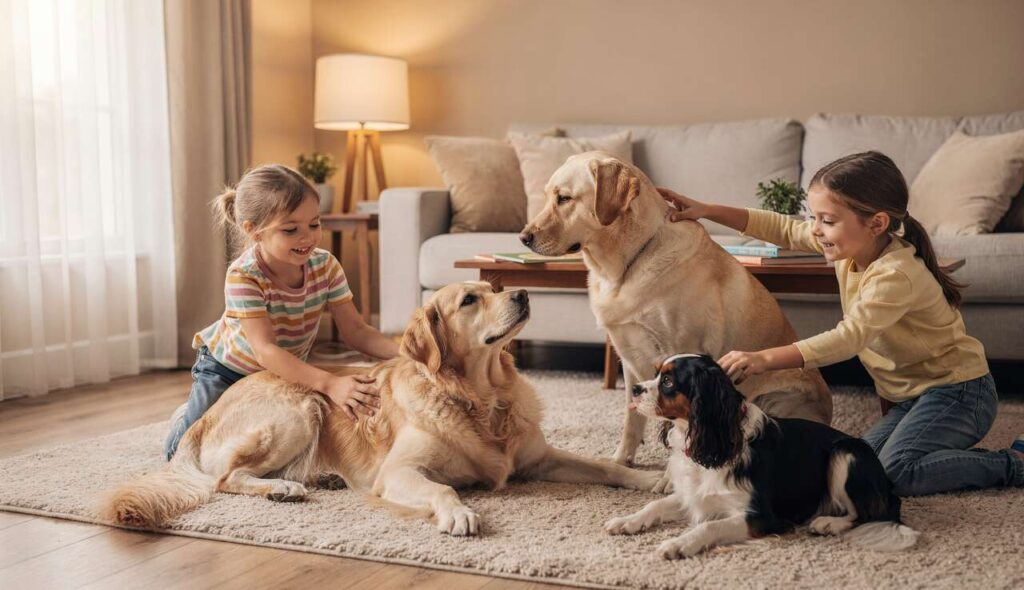
Choosing the right dog for a family with children requires careful consideration of temperament, energy levels, and natural instincts. Professional trainers consistently emphasize that while individual personality plays a significant role, certain breeds demonstrate exceptional gentleness and patience when interacting with young family members. These breeds possess innate qualities that make them particularly well-suited for households where children are present, combining protective instincts with remarkable tolerance and affection.
Labrador retriever: an ideal companion for children
Natural temperament and playful energy
The Labrador retriever stands out as one of the most family-friendly breeds available today. Professional trainers consistently rank this breed at the top of their recommendations for families with children due to their inherently gentle nature and boundless enthusiasm for play. Labradors possess a unique combination of energy and restraint that allows them to engage actively with children while maintaining appropriate boundaries.
These dogs demonstrate remarkable patience during interactions with young children, tolerating the occasional tail pull or unexpected hug with grace. Their playful disposition means they genuinely enjoy the active lifestyle that comes with having children in the household, whether that involves:
- Playing fetch in the backyard for extended periods
- Swimming and water activities during summer months
- Participating in family walks and outdoor adventures
- Engaging in gentle roughhousing under supervision
Intelligence and trainability
Beyond their friendly demeanor, Labradors exhibit exceptional intelligence that makes training straightforward for families. This cognitive ability translates into quick learning of household rules and appropriate behavior around children. Their eagerness to please means they respond well to positive reinforcement techniques, making them suitable even for first-time dog owners.
| Characteristic | Rating |
|---|---|
| Patience with children | Excellent |
| Energy level | High |
| Trainability | Very high |
| Protective instinct | Moderate |
Understanding the qualities that make Labradors exceptional leads naturally to examining another breed with similarly outstanding characteristics for family environments.
Golden retriever: embodiment of gentleness and patience
Exceptional emotional intelligence
Golden retrievers possess an extraordinary ability to read human emotions, making them particularly attuned to the needs of children. Professional trainers note that these dogs seem to instinctively understand when a child needs comfort or when playtime should be gentle. This emotional sensitivity creates a unique bond between Golden retrievers and young family members.
The breed’s calm demeanor complements their playful side perfectly, allowing them to adjust their energy levels based on the situation. They can transition seamlessly from active outdoor play to quiet companionship during reading time or homework sessions.
Consistent reliability and safety
Parents consistently report that Golden retrievers demonstrate remarkable predictability in their behavior, which provides peace of mind when children are present. These dogs rarely display aggressive tendencies and maintain their gentle approach even in unexpected situations. Their reliability stems from:
- Stable temperament across various environments
- Low reactivity to sudden noises or movements
- Natural inclination toward non-aggressive problem-solving
- Consistent affectionate behavior toward family members
This breed’s devotion to family members extends to a protective nature that never crosses into aggression, qualities shared by another large breed known for its gentle approach.
Bernese mountain dog: the gentle protector
Size paired with remarkable gentleness
Despite their imposing stature, Bernese mountain dogs exhibit extraordinary gentleness with children. Professional trainers emphasize that this breed seems acutely aware of its size and adjusts its movements accordingly when around small family members. Their calm and steady presence provides both companionship and a sense of security.
These dogs naturally assume a watchful role over children without displaying territorial aggression. Their protective instinct manifests as attentive supervision rather than defensive behavior, making them ideal for families seeking both a companion and a guardian.
Affectionate nature and family bonds
Bernese mountain dogs form deep attachments to their families, particularly enjoying the company of children. Their affectionate nature means they actively seek out interaction and physical closeness, often positioning themselves near children during family activities. The breed demonstrates patience during grooming sessions initiated by children and tolerates dress-up games with remarkable composure.
| Breed | Average weight | Temperament with children |
|---|---|---|
| Labrador retriever | 55-80 lbs | Playful and energetic |
| Golden retriever | 55-75 lbs | Gentle and patient |
| Bernese mountain dog | 70-115 lbs | Calm and protective |
While breed characteristics provide a foundation, proper training remains essential for ensuring these natural tendencies develop appropriately.
The importance of canine education for exemplary behavior
Foundation training principles
Even breeds with naturally gentle dispositions require consistent training to reach their full potential as family companions. Professional trainers stress that education should begin early, focusing on basic obedience commands and appropriate social behavior. This foundation ensures that dogs understand household expectations and respond reliably to direction.
Key training elements include:
- Basic commands such as sit, stay, and come
- Proper leash manners for family walks
- Boundary recognition within the home
- Appropriate play behavior with children
- Impulse control around food and toys
Socialization and exposure
Beyond basic obedience, comprehensive socialization plays a crucial role in developing well-adjusted family dogs. Exposing dogs to various situations, people, and environments during their formative months creates confident, adaptable adults. This process should include supervised interactions with children of different ages to ensure comfort across all developmental stages.
Training considerations naturally extend into the selection process, where families must evaluate multiple factors before bringing a dog home.
How to choose the right dog for your family
Assessing family lifestyle and needs
Selecting the appropriate breed requires honest evaluation of family circumstances, including available space, activity levels, and time commitments. Families with active outdoor lifestyles may find Labradors particularly compatible, while those seeking a calmer presence might prefer the steadier temperament of a Bernese mountain dog. Consider factors such as:
- Available living space and yard access
- Family activity level and exercise capacity
- Time available for training and grooming
- Financial resources for veterinary care and maintenance
- Ages and temperaments of children in the household
Meeting individual dogs and breeders
While breed characteristics provide guidance, individual personality varies significantly among dogs. Professional trainers recommend meeting multiple dogs and observing their interactions with children before making a final decision. Reputable breeders should encourage such visits and provide transparent information about health testing and lineage.
Once the right match is identified, families must prepare for successful integration into the household through thoughtful planning and preparation.
A few tips for promoting harmonious coexistence
Establishing household rules and boundaries
Creating a harmonious environment requires clear rules that apply to both children and dogs. Families should establish designated spaces where dogs can retreat when needing rest, teaching children to respect these boundaries. Consistent enforcement of rules prevents confusion and ensures everyone understands expectations.
Supervised interactions and ongoing education
Even with gentle breeds, supervision remains essential during interactions between dogs and young children. Parents should actively teach children appropriate ways to approach, pet, and play with their canine companions. This ongoing education includes recognizing signs of stress in dogs and understanding when to give them space.
Families who prioritize these breeds and commit to proper training and supervision create environments where children and dogs thrive together. The Labrador retriever, Golden retriever, and Bernese mountain dog each bring unique strengths to family life, sharing common traits of gentleness, patience, and reliability. With appropriate selection, training, and management, these breeds fulfill their potential as exceptional companions for children, creating lasting bonds and positive experiences that benefit both young family members and their four-legged friends throughout years of shared adventures and daily life.