



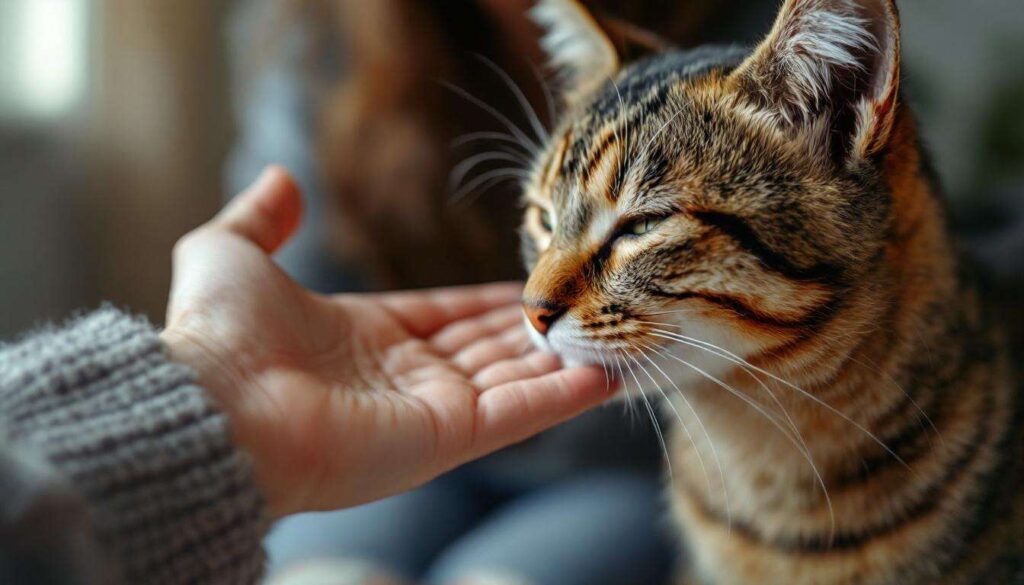
Cat owners worldwide have experienced that gentle bump of a furry head against their hand, leg, or face. This seemingly simple gesture carries profound meaning in feline communication and reveals much about the relationship between cats and their human companions. Understanding what motivates this behavior provides valuable insight into your pet’s emotional state and social needs.
The head-butting behavior in cats
What is head-butting in feline terms
Head-butting, scientifically known as bunting, represents a deliberate physical contact initiated by cats using their head and face. This behavior involves the cat pressing its forehead, cheeks, or chin against objects, other animals, or people. The action differs from aggressive headbutts seen in other species, as feline bunting is always gentle and affectionate in nature.
Cats perform this gesture with remarkable precision, targeting specific areas of their face against chosen surfaces. The movement typically begins with a slow approach, followed by a sustained press lasting several seconds, and sometimes includes rubbing motions along the contacted surface.
Common situations triggering this behavior
Several circumstances prompt cats to engage in head-butting behavior:
- Greeting their owner after a period of absence
- Morning wake-up routines when seeking attention
- Mealtime requests or anticipation
- Moments of relaxation when the cat feels particularly content
- Introduction to new objects or furniture in the home
- Social interactions with other household pets
The frequency and intensity of head-butting vary among individual cats, with some performing this gesture multiple times daily while others reserve it for special moments. Environmental factors, including stress levels and social dynamics, also influence how often cats display this behavior.
Understanding when and where cats choose to headbutt provides clues about their emotional landscape and communication preferences, setting the stage for exploring the deeper motivations behind this endearing action.
Why do cats headbutt you ?
Expression of trust and affection
When a cat headbutts you, it demonstrates profound trust and emotional attachment. This behavior signifies that your cat views you as a safe, valued member of its social circle. Cats are selective about whom they choose to bunt, reserving this intimate gesture for individuals they genuinely appreciate.
The vulnerability displayed during head-butting reveals much about feline psychology. By bringing their head close to you, cats expose one of their most sensitive body parts, an action they would never perform around perceived threats. This calculated vulnerability underscores the depth of their comfort level with you.
Social bonding mechanism
Head-butting serves as a critical component of feline social structure. In multi-cat households or colonies, cats regularly bunt each other to maintain group cohesion and establish social bonds. When your cat extends this behavior to you, it essentially incorporates you into its family unit.
| Relationship Type | Bunting Frequency | Typical Context |
|---|---|---|
| Close companions | Multiple times daily | Greetings, play, rest |
| Familiar acquaintances | Occasionally | Specific situations only |
| Strangers or threats | Never | N/A |
Request for attention or resources
While affection drives most head-butting episodes, cats also employ this behavior strategically to communicate needs. A cat might headbutt you persistently before mealtime, when the water bowl sits empty, or when it desires playtime. This pragmatic application demonstrates feline intelligence in using positive reinforcement techniques to obtain desired outcomes.
The combination of emotional expression and practical communication makes head-butting a multifaceted behavior that bridges the gap between instinctive social bonding and learned interaction patterns, particularly involving the chemical signals cats rely upon heavily.
The importance of pheromones in territory marking
Facial glands and scent production
Cats possess specialized sebaceous glands concentrated in specific facial regions that produce unique chemical signatures. These glands are located primarily around the cheeks, chin, forehead, and lips. When cats headbutt, they deliberately deposit these pheromones onto the contacted surface or individual.
The chemical composition of feline facial pheromones includes various compounds that convey information about the cat’s identity, reproductive status, and emotional state. Unlike urine marking, which signals territorial boundaries aggressively, facial pheromone deposition represents friendly, affiliative marking.
Creating a familiar scent environment
Through repeated head-butting, cats establish a comforting olfactory landscape within their territory. This scent-marking behavior serves multiple purposes:
- Creating a sense of security through familiar smells
- Reducing anxiety in the home environment
- Identifying safe objects, spaces, and individuals
- Establishing ownership without aggression
- Facilitating navigation through scent trails
When your cat headbutts you, it simultaneously marks you as part of its territory and absorbs your scent, creating a blended olfactory profile that reinforces mutual belonging. This exchange strengthens the bond between cat and owner at a chemical level imperceptible to human senses but profoundly meaningful to felines.
The territorial aspect of head-butting naturally connects to its role in emotional communication, where physical contact and chemical messaging combine to express complex feelings.
Affective communication between the cat and its owner
Non-verbal language interpretation
Cats communicate primarily through body language and physical gestures rather than vocalizations. Head-butting represents one of the most unambiguous positive signals in the feline behavioral repertoire. Unlike ambiguous tail positions or ear orientations, bunting consistently indicates positive emotional states.
Accompanying behaviors during head-butting episodes provide additional context about your cat’s emotional state. A cat that headbutts while purring, maintaining a relaxed posture, and displaying soft eyes communicates maximum contentment and affection. Conversely, urgent or repeated bunting combined with meowing might signal specific needs requiring attention.
Building mutual understanding
Recognizing and appropriately responding to head-butting strengthens the human-feline relationship. Cats learn to associate this behavior with positive outcomes, reinforcing its use as a communication tool. Over time, patterns emerge that help owners anticipate their cat’s needs and emotional states.
| Head-butting Pattern | Likely Meaning | Appropriate Response |
|---|---|---|
| Gentle morning bunt | Greeting and affection | Pet and acknowledge |
| Persistent bunting | Specific need or request | Investigate and address |
| Bunt with rubbing | Intense affection | Extended interaction |
This reciprocal communication system develops uniquely within each human-cat relationship, creating personalized interaction patterns that distinguish head-butting from other common feline behaviors with different meanings.
Differences between head-butting and other feline behaviors
Head-butting versus head rubbing
While closely related, head-butting and head rubbing exhibit distinct characteristics. Head-butting involves a direct, perpendicular contact with the forehead or top of the head pressed against a surface. Head rubbing, by contrast, features lateral movements where the cat slides its cheeks and body along objects or people.
Both behaviors deposit pheromones, but rubbing covers larger surface areas and often transitions into full-body contact. Head-butting tends to be more focused and deliberate, targeting specific spots with precision.
Distinguishing from aggressive behaviors
Context and accompanying signals differentiate affectionate bunting from aggressive head-based behaviors:
- Affectionate bunting: relaxed body, purring, soft eyes, slow movements
- Aggressive contact: tense muscles, flattened ears, dilated pupils, hissing or growling
- Play aggression: energetic movements, pouncing, quick retreats
- Defensive postures: arched back, piloerection (raised fur), sideways stance
True head-butting never includes forceful impact or sustained pressure that causes discomfort. The gesture remains consistently gentle and controlled, reflecting its affiliative purpose rather than confrontational intent.
Comparison with other affection displays
Cats express affection through various behaviors beyond head-butting, including slow blinking, kneading, bringing gifts, and sleeping nearby. Head-butting stands out as particularly interactive, requiring proximity and direct physical contact. Unlike passive affection displays, bunting actively engages the recipient and demands acknowledgment.
Recognizing these behavioral distinctions helps owners respond appropriately to their cat’s communication attempts, particularly when deciding how to react to head-butting episodes.
How to react when your cat headbutts you ?
Appropriate responses to encourage bonding
When your cat headbutts you, reciprocate with gentle physical affection to reinforce the positive interaction. Appropriate responses include:
- Gently petting your cat’s head, cheeks, or chin
- Speaking in soft, calm tones
- Offering a slow blink to mirror feline affection signals
- Allowing your cat to continue bunting without interruption
- Providing treats occasionally to create positive associations
Avoid abrupt movements or loud reactions that might startle your cat and discourage future head-butting. The goal is to acknowledge and validate your cat’s communication attempt while respecting its comfort boundaries.
What to avoid during these interactions
Certain reactions can undermine the trust and affection your cat expresses through head-butting. Avoid pushing your cat away, ignoring the gesture entirely, or responding with excessive enthusiasm that overwhelms your pet. Forcing prolonged interaction when your cat attempts to disengage also damages the communication dynamic.
Respect your cat’s autonomy by allowing it to initiate and conclude head-butting episodes according to its preferences. This approach maintains the behavior’s voluntary nature and preserves its role as genuine affection rather than obligatory performance.
Using head-butting to assess your cat’s well-being
Changes in head-butting frequency or intensity can indicate shifts in your cat’s physical or emotional health. A sudden decrease might signal illness, stress, or environmental changes causing discomfort. Conversely, increased bunting might reflect heightened anxiety or attention-seeking behavior related to unmet needs.
| Behavioral Change | Possible Cause | Recommended Action |
|---|---|---|
| Decreased bunting | Illness or stress | Veterinary consultation |
| Increased bunting | Anxiety or needs | Environmental assessment |
| Aggressive bunting | Frustration | Identify unmet needs |
Monitoring these patterns provides valuable insights into your cat’s overall well-being and helps identify potential issues before they escalate.
Head-butting represents far more than a simple physical gesture in feline communication. This behavior combines territorial marking, social bonding, and emotional expression into a single action that strengthens the human-cat relationship. By understanding the biological mechanisms, social functions, and emotional significance behind bunting, cat owners can better interpret their pet’s needs and respond appropriately. Recognizing head-butting as a privilege reserved for trusted companions deepens appreciation for this common yet meaningful feline behavior that enriches daily interactions between cats and their devoted owners.