



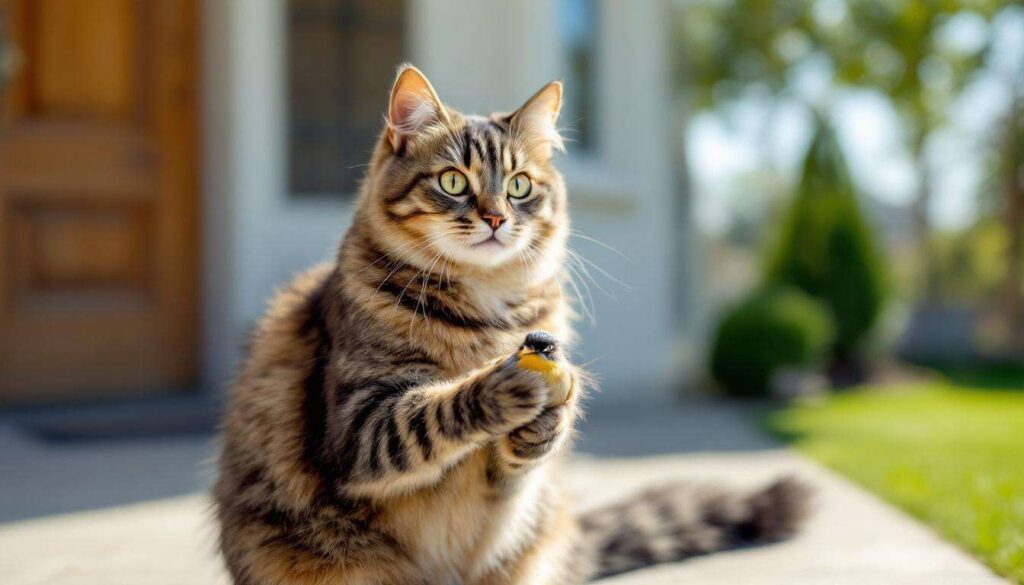
Every cat owner has experienced that peculiar moment when their beloved feline drops a dead mouse, bird, or lizard at their feet, often accompanied by a proud meow. While this behavior might seem disturbing or confusing to humans, it represents a fundamental aspect of feline nature that has persisted through thousands of years of domestication. Animal behaviorists and veterinary experts have extensively studied this phenomenon, revealing fascinating insights into the complex psychology and instinctual drives that motivate our cats to present us with these unexpected offerings.
Understanding the cat’s hunting behavior
The innate predatory drive
Cats are obligate carnivores with a deeply ingrained hunting instinct that remains active regardless of their domestic status. Unlike dogs, which have been selectively bred for various tasks over millennia, cats retain much of their wild ancestry. This predatory drive is hardwired into their neurological system, making hunting an instinctual behavior rather than a learned one. Even well-fed house cats experience the urge to stalk, chase, and capture prey because these behaviors trigger the release of dopamine and other neurochemicals that create feelings of satisfaction and accomplishment.
Key elements of feline hunting sequences
The hunting sequence in cats follows a predictable pattern that demonstrates their sophisticated predatory skills:
- Searching and locating potential prey through visual and auditory cues
- Stalking with characteristic low body posture and slow, deliberate movements
- Pouncing with explosive speed and precision timing
- Capturing and delivering the killing bite to the prey’s neck
- Carrying and presenting the catch to a chosen location
Each stage of this sequence provides mental and physical stimulation that cats require for their overall wellbeing. The entire process engages their senses, reflexes, and cognitive abilities in ways that few other activities can match.
Understanding these fundamental aspects of hunting behavior provides essential context for why cats continue to bring their owners these unwanted presents, even when their food bowls remain perpetually full.
The origins of hunting behavior
Evolutionary background
The domestic cat’s hunting prowess traces back approximately 10,000 years to their wild ancestors in the Near East. The African wildcat, Felis silvestris lybica, developed exceptional hunting skills to survive in arid environments where prey could be scarce. These cats evolved as solitary hunters, unlike pack predators, which significantly influences their behavior today. Their ancestors needed to be self-sufficient hunters to survive, and this genetic programming remains largely intact in modern domestic cats.
Domestication and retained instincts
Unlike other domesticated animals, cats underwent a unique domestication process. They essentially domesticated themselves by choosing to live near human settlements where rodents were abundant. This relationship was mutually beneficial: humans appreciated the pest control, and cats enjoyed easy access to prey. Importantly, humans never selectively bred cats to suppress their hunting instincts, which explains why these behaviors persist so strongly today.
| Species | Years of domestication | Hunting instinct retention |
|---|---|---|
| Domestic cat | 10,000 | 95-100% |
| Dog | 15,000-40,000 | 30-70% (varies by breed) |
| Livestock | 10,000+ | Minimal to none |
This evolutionary heritage explains why even pampered indoor cats display hunting behaviors when they encounter appropriate stimuli, leading naturally to questions about what drives them to remain active hunters despite having all their nutritional needs met.
The importance of stimulation for the cat
Mental enrichment through hunting
Hunting provides crucial mental stimulation that cats need to maintain psychological health. The complex cognitive processes involved in tracking, stalking, and capturing prey engage multiple brain regions simultaneously. Without adequate mental challenges, cats can develop behavioral problems including:
- Excessive vocalization and attention-seeking behaviors
- Destructive scratching or chewing
- Aggression toward humans or other pets
- Depression and lethargy
- Obsessive-compulsive behaviors like excessive grooming
Physical exercise requirements
The physical demands of hunting help cats maintain healthy body weight, muscle tone, and cardiovascular fitness. Indoor cats particularly benefit from activities that mimic hunting because they lack natural opportunities for exercise. A successful hunt involves explosive bursts of energy, precise coordination, and sustained periods of focused attention, all of which contribute to a cat’s physical conditioning.
Stress reduction and wellbeing
Engaging in hunting behavior, even through play, helps cats manage stress and anxiety. The act of successfully “catching” prey releases endorphins and creates a sense of accomplishment that boosts confidence and reduces cortisol levels. This explains why cats often seem more relaxed and content after a vigorous play session with interactive toys.
These stimulation needs directly connect to why cats feel compelled to share their hunting successes with their human companions, a behavior that reflects deeper social motivations.
Why does the cat share its prey ?
The teaching theory
One of the most widely accepted explanations suggests that cats bring prey to their owners as part of a teaching behavior. In the wild, mother cats bring prey to their kittens to teach them hunting skills. Initially, mothers bring dead prey, then progressively bring live but injured prey, allowing kittens to practice killing techniques safely. Some animal behaviorists believe domestic cats may view their human companions as less competent hunters who need instruction, prompting them to demonstrate proper hunting techniques.
Social bonding and resource sharing
Another theory focuses on social bonding. Cats may bring prey to their owners as a form of resource sharing, similar to how they might share food with family members in a multi-cat household. This behavior indicates that the cat considers you part of their social group and wants to contribute to the household’s food supply. It represents a gesture of trust and affection rather than an attempt to disturb or upset you.
Safe storage location
Some experts propose a more practical explanation: cats bring prey into the home simply because they consider it a safe storage location. In the wild, cats often cache prey in secure spots to protect it from scavengers. Your home represents the ultimate safe zone, and your cat may be bringing their catch inside for safekeeping rather than specifically gifting it to you.
Attention-seeking behavior
Additionally, some cats learn that bringing prey generates a strong reaction from their owners. Even negative attention like shouting or chasing the cat can reinforce the behavior if the cat interprets it as engagement and interaction. This creates a cycle where the cat continues bringing gifts because it reliably produces a response.
Understanding these motivations helps owners develop appropriate responses to their cat’s gift-giving behavior, which requires careful consideration to avoid reinforcing unwanted patterns while respecting the cat’s natural instincts.
How to react to your cat’s “gifts”
Appropriate immediate responses
When your cat presents you with prey, your reaction significantly impacts future behavior. Experts recommend remaining calm and neutral rather than expressing strong emotions. Avoid scolding, yelling, or punishing your cat, as they cannot understand why you’re upset about what they perceive as a generous offering. Instead, quietly remove the prey using gloves or paper towels, and dispose of it properly without making a dramatic scene.
Praise alternative behaviors
Focus on redirecting the hunting instinct toward acceptable outlets rather than trying to suppress it entirely. When your cat plays with toys instead of hunting live prey, offer verbal praise and treats to reinforce this behavior. This positive reinforcement helps your cat understand which activities earn approval without diminishing their natural drives.
Safety and hygiene considerations
Handling prey requires attention to health concerns:
- Always wear disposable gloves when touching dead animals
- Thoroughly disinfect any surfaces that contacted the prey
- Wash your hands with antibacterial soap after cleanup
- Monitor your cat for signs of illness from potential parasites or diseases
- Ensure your cat’s vaccinations remain current, especially rabies protection
These practical responses address the immediate situation, but long-term solutions require proactive strategies that satisfy your cat’s hunting needs through appropriate channels.
Encouraging positive behavior in cats
Interactive play sessions
Scheduling regular interactive play sessions provides an outlet for hunting instincts while strengthening your bond with your cat. Use toys that mimic prey movements, such as feather wands, laser pointers, or motorized mice. Aim for at least two 15-minute sessions daily, preferably before mealtimes to replicate the natural hunt-eat-groom-sleep cycle that cats follow in the wild.
Environmental enrichment strategies
Creating a stimulating home environment reduces the appeal of hunting live prey:
- Install cat trees and perches near windows for wildlife observation
- Rotate toys regularly to maintain novelty and interest
- Provide puzzle feeders that require problem-solving to access food
- Create vertical spaces for climbing and exploration
- Consider adopting a second cat for social interaction and play
Outdoor access management
For cats that go outdoors, consider timing their outdoor access to minimize hunting opportunities. Keep cats indoors during dawn and dusk when prey animals are most active. Alternatively, explore options like:
| Solution | Effectiveness | Considerations |
|---|---|---|
| Catio (enclosed patio) | Very high | Requires space and construction |
| Leash training | Moderate to high | Requires patience and training |
| Collar bells | Low to moderate | May reduce but not eliminate hunting |
Feeding schedule optimization
Implementing a structured feeding schedule that mimics natural eating patterns can reduce hunting motivation. Feed smaller portions multiple times daily rather than leaving food available constantly. This approach satisfies the hunt-reward cycle psychologically while ensuring your cat receives proper nutrition.
These proactive strategies help create a fulfilling environment that honors your cat’s instinctual needs while reducing unwanted hunting behaviors, ultimately leading to a happier, healthier relationship between cats and their owners.
The behavior of bringing prey gifts represents a complex interplay of instinct, social bonding, and environmental stimulation needs. Rather than viewing these offerings as problematic, understanding them as expressions of your cat’s natural drives allows for more compassionate and effective responses. By providing appropriate outlets for hunting instincts through interactive play, environmental enrichment, and structured routines, owners can satisfy their cats’ psychological and physical needs while minimizing unwanted prey presentation. Recognizing that this behavior stems from deeply rooted evolutionary programming helps foster appreciation for the remarkable predatory abilities that make cats such fascinating companions.