



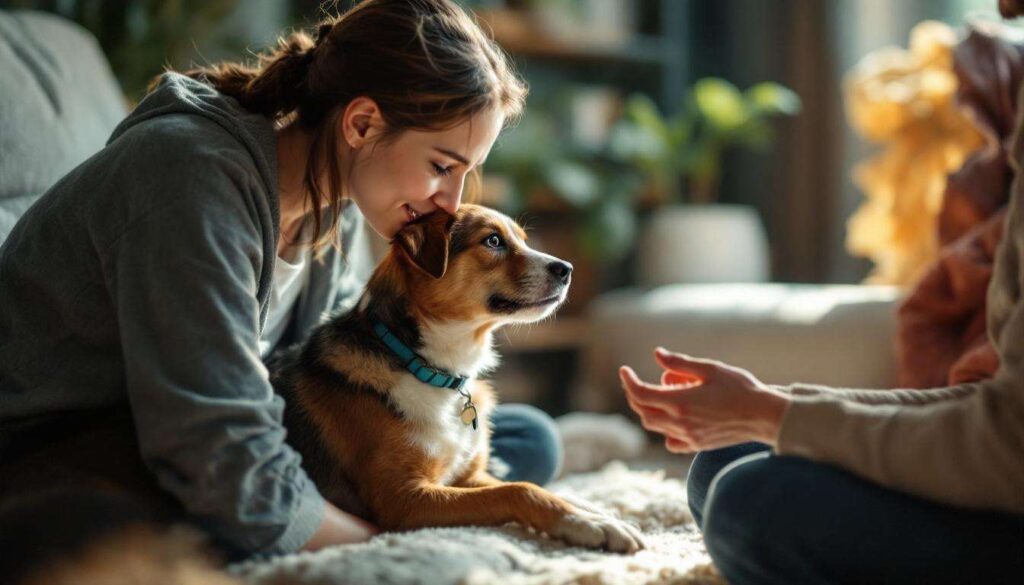
Rescue dogs often arrive in their new homes carrying invisible scars from their previous experiences. While some adapt quickly to their changed circumstances, others require extended periods before they can fully relax and bond with their adoptive families. Professional trainers emphasize that this prolonged adjustment period stems from complex psychological factors that demand specialized understanding and approaches from new owners.
Past traumas of rescue dogs
Common experiences that shape fearful behavior
Rescue dogs frequently come from backgrounds marked by neglect, abuse, or abandonment. These experiences create lasting impressions that influence how they perceive human interactions. Dogs who have suffered physical punishment may flinch at raised hands, while those who experienced food scarcity might display resource guarding behaviors. Animals removed from hoarding situations often struggle with environmental overstimulation and social anxieties.
The psychological impact of trauma manifests differently depending on several factors:
- The dog’s age when the trauma occurred
- Duration and severity of negative experiences
- Breed characteristics and individual temperament
- Previous positive socialization experiences
- Time spent in shelter environments
How shelter environments affect trust development
Even well-managed shelters present challenges for dogs trying to maintain emotional equilibrium. The constant presence of unfamiliar people, overwhelming noise levels, and disrupted routines create chronic stress conditions. Dogs in these environments often develop hypervigilance as a survival mechanism. This heightened state of alertness doesn’t simply disappear when they enter a quieter home environment.
Understanding these foundational trauma responses helps explain why establishing trust becomes such a gradual process, leading naturally to considerations about the approach new owners must adopt.
The importance of patience and consistency
Establishing predictable routines
Traumatized dogs find comfort in predictability. When daily activities occur at consistent times, these animals begin recognizing patterns that help them feel secure. Feeding schedules, walk times, and play sessions should maintain regularity during the initial adjustment months. This structure provides a framework within which trust can gradually develop.
| Daily Activity | Recommended Consistency Level | Impact on Trust Building |
|---|---|---|
| Feeding times | Within 30-minute window | High – establishes reliability |
| Walk schedule | Same times daily | High – creates anticipation |
| Quiet time | Consistent location and duration | Medium – provides security |
| Training sessions | Regular frequency | High – builds communication |
Avoiding common mistakes that delay bonding
New owners often unknowingly sabotage trust-building through excessive enthusiasm. Overwhelming a fearful dog with attention, frequent visitors, or rapid environmental changes can trigger setbacks. Other counterproductive behaviors include:
- Forcing physical contact before the dog initiates it
- Punishing fearful reactions or avoidance behaviors
- Inconsistent enforcement of household rules
- Exposing the dog to triggering situations prematurely
- Showing frustration when progress seems slow
These missteps underscore why owners must also develop skills in reading their dog’s emotional state through nonverbal communication.
Understanding the dog’s body language
Recognizing stress signals
Dogs communicate discomfort through subtle physical cues that untrained observers often miss. A dog avoiding eye contact isn’t being stubborn but rather displaying calming signals that indicate stress or uncertainty. Yawning in non-tired contexts, excessive panting without physical exertion, and tucked tails all convey anxiety.
More obvious stress indicators include:
- Whale eye (showing whites of eyes)
- Pinned-back ears
- Lip licking or nose licking
- Freezing or becoming statue-like
- Pacing or inability to settle
- Excessive shedding in non-seasonal contexts
Identifying signs of growing comfort
Progress in trust development appears through increasingly relaxed body postures. A dog who begins sleeping in exposed positions rather than curled tightly demonstrates growing security. Soft eye contact, relaxed mouth positions, and willingness to show the belly indicate positive emotional shifts. When a previously withdrawn dog initiates play or brings toys to their owner, these behaviors signal significant trust milestones.
Recognizing these signals allows owners to calibrate their approach, which connects directly to specific techniques that accelerate trust formation.
Techniques for building trust
Creating safe spaces
Every rescue dog needs a designated refuge where they can retreat without interference. This might be a crate covered with blankets, a specific room, or a quiet corner with a comfortable bed. Family members must respect this space as off-limits for interaction, allowing the dog complete autonomy over when to engage.
Gradual desensitization approaches
Systematic exposure to previously frightening stimuli helps dogs overcome specific fears. This process requires careful pacing that keeps the dog below their fear threshold. For instance, a dog terrified of men might first observe a male family member from across a large room while receiving treats, gradually decreasing distance over weeks as comfort increases.
Key principles for successful desensitization include:
- Starting at intensity levels that produce no visible stress
- Advancing only when the dog shows relaxed body language
- Pairing the trigger with positive experiences
- Never forcing proximity or interaction
- Accepting that progress occurs in small increments
Hand-feeding and interactive games
Offering meals by hand transforms feeding time into trust-building opportunities. This technique requires the dog to approach willingly and accept food directly from the owner, creating positive associations with human hands. Similarly, low-pressure games like hiding treats around the house encourage exploration while building confidence.
These foundational techniques become significantly more effective when combined with specific training philosophies centered on encouragement rather than correction.
The role of positive reinforcement
Why punishment damages fragile trust
Rescue dogs with trauma histories cannot distinguish between corrective punishment and the abuse they previously experienced. Any aversive training methods risk destroying emerging trust and reinforcing existing fears. Even verbal corrections delivered in harsh tones can trigger trauma responses that set back weeks of progress.
The neurological impact of fear-based training creates:
- Increased cortisol levels that impair learning
- Heightened anxiety in the owner’s presence
- Suppressed behaviors rather than changed motivations
- Potential for defensive aggression
- Damaged long-term relationship quality
Rewarding brave behaviors
Positive reinforcement training focuses on acknowledging desired behaviors through rewards. When a fearful dog takes a tentative step toward an owner, that courage deserves immediate recognition through treats, gentle praise, or play. This approach teaches dogs that choosing to engage produces pleasant outcomes, gradually shifting their emotional associations.
Effective rewards vary by individual preference but commonly include:
| Reward Type | Best Used For | Considerations |
|---|---|---|
| High-value treats | Major breakthroughs | Reserve special foods for significant progress |
| Verbal praise | Continuous encouragement | Use calm, warm tones |
| Play sessions | Confidence building | Only if dog shows interest in toys |
| Petting | Bonding moments | Wait for dog to solicit contact |
Despite implementing these evidence-based approaches, some situations exceed the capabilities of even dedicated owners, necessitating expert intervention.
When to consult a professional
Signs that expert help is needed
Certain behavioral patterns indicate that professional guidance has become necessary. Aggression that escalates rather than diminishes, complete social withdrawal lasting beyond several months, or self-harming behaviors require immediate professional assessment. Dogs displaying severe separation anxiety, destructive panic responses, or reactivity that poses safety risks need specialized intervention.
Types of professionals who can help
Different specialists address various aspects of behavioral rehabilitation. Certified professional dog trainers focus on teaching specific skills and modifying problem behaviors. Veterinary behaviorists hold medical degrees and can prescribe anxiety medications when appropriate. Certified applied animal behaviorists possess advanced degrees in behavior science and design comprehensive modification programs.
When selecting a professional, owners should verify:
- Credentials from recognized certification organizations
- Exclusive use of positive reinforcement methods
- Experience specifically with traumatized rescue dogs
- Willingness to work collaboratively with owners
- Realistic timelines and outcome expectations
The journey of helping a traumatized rescue dog develop trust demands extraordinary commitment from adoptive families. These animals require owners who understand that healing occurs gradually, often with setbacks interspersed among victories. Recognizing trauma responses, maintaining unwavering consistency, interpreting canine communication accurately, applying gentle training techniques, and knowing when professional support becomes necessary all contribute to successful rehabilitation. While months may pass before a rescue dog fully relaxes into their new life, the resulting bond often proves exceptionally strong, built on a foundation of patience and mutual respect that transforms both dog and owner.