


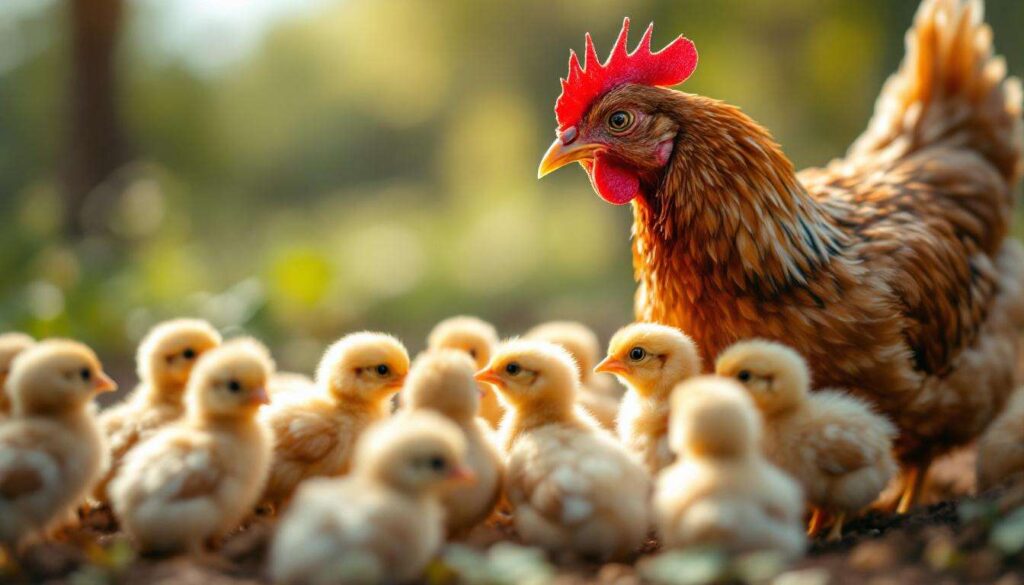
Poultry farmers and researchers alike have long observed a fascinating phenomenon: hens possess an uncanny ability to distinguish their own offspring from others within a flock. This recognition system operates with remarkable precision, even when dozens of chicks scramble together in a crowded environment. While many assume this behavior stems from simple visual cues, the reality involves a complex interplay of biological mechanisms that scientists continue to investigate. Understanding how hens identify their young reveals insights into avian cognition, maternal behavior, and the evolutionary pressures that shaped these instincts over millennia.
The mystery of the maternal instinct of hens
An evolutionary advantage rooted in survival
The maternal instinct in hens represents a critical survival mechanism that ensures offspring receive adequate protection and resources during their vulnerable early stages. Unlike mammals that nurse their young, hens must guide chicks to food sources, teach foraging behaviors, and shield them from predators. This instinct manifests immediately after hatching, when broody hens transition from incubating eggs to actively caring for newly emerged chicks. The biological imperative driving this behavior stems from reproductive success, as hens that effectively recognize and protect their genetic offspring pass these traits to subsequent generations.
The complexity beyond simple observation
Scientists have documented that maternal recognition in hens extends far beyond what casual observation might suggest. Research indicates this instinct involves multiple sensory pathways working simultaneously to create a comprehensive identification system. Key components include:
- Neurological responses triggered by specific chick vocalizations
- Hormonal changes during brooding that prime recognition abilities
- Memory formation during the critical imprinting period
- Behavioral patterns that reinforce mother-offspring bonds
This multifaceted approach ensures hens maintain accurate recognition even as chicks grow and their physical characteristics change. The persistence of this instinct throughout the brooding period demonstrates its fundamental importance to poultry reproductive biology.
Understanding these foundational aspects sets the stage for examining the specific moments when recognition first occurs.
The first interactions between the hen and her chicks
The critical imprinting window
The initial hours after hatching constitute the most crucial period for establishing the hen-chick bond. During this window, which typically spans 12 to 24 hours, both mother and offspring undergo rapid learning processes that cement their relationship. The hen remains attentive to sounds emanating from beneath her body as chicks begin breaking through their shells, responding with soft clucking sounds that research suggests may facilitate early recognition. This pre-hatching communication creates acoustic familiarity before visual contact even occurs.
Physical proximity and early bonding
Once chicks emerge from their shells, hens engage in specific behaviors that strengthen recognition capabilities. These include:
- Allowing chicks to nestle beneath feathers for warmth and security
- Maintaining constant physical contact during the first 48 hours
- Responding immediately to distress calls from their brood
- Leading chicks to food while emitting distinctive feeding calls
Studies have shown that hens separated from their chicks during this critical period display reduced recognition accuracy later, suggesting that continuous early exposure plays an essential role in establishing the maternal bond. The sensory information gathered during these first interactions forms a template against which the hen compares other chicks she encounters.
While these early physical interactions establish initial bonds, auditory communication provides the primary mechanism for ongoing recognition.
The importance of vocal signals in recognition
The unique acoustic signature of chicks
Research has revealed that each chick produces distinctive vocalizations with subtle variations in pitch, rhythm, and frequency that hens can detect and remember. These acoustic signatures function similarly to voice recognition in humans, allowing mothers to identify their offspring among mixed groups. Experiments conducted in controlled environments demonstrate that hens respond more quickly and consistently to recordings of their own chicks’ calls compared to unfamiliar chick vocalizations, even when visual cues are absent.
The hen’s vocal repertoire
Hens employ a sophisticated range of calls to communicate with their broods, each serving specific functions in the recognition and care process. The following table illustrates the primary vocal categories:
| Call Type | Purpose | Recognition Function |
|---|---|---|
| Soft clucking | General communication and reassurance | Maintains contact and location awareness |
| Food calls | Signals food availability | Teaches chicks to respond to maternal cues |
| Alarm calls | Warns of danger | Triggers immediate gathering response |
| Brooding calls | Invites chicks to shelter | Reinforces protective relationship |
Chicks learn to recognize their mother’s specific vocal patterns within days of hatching, creating a bidirectional recognition system that strengthens over time. This acoustic bond proves particularly valuable in free-range environments where visual contact may be intermittent.
Beyond auditory cues, additional sensory channels contribute to the recognition process.
The role of smell and physical contact
Olfactory recognition in avian species
While birds were long considered to have limited olfactory capabilities, recent research has challenged this assumption. Studies indicate that hens possess functional olfactory systems capable of detecting chemical signatures from their chicks. The preen gland, located near the tail, secretes oils that chicks spread across their feathers during grooming. These oils contain individual chemical profiles that may contribute to maternal recognition, particularly during close physical contact under the hen’s wings.
Tactile information and behavioral cues
Physical contact provides hens with additional recognition data through tactile sensations. When chicks nestle against their mother, she receives information about:
- Size and weight variations among individual chicks
- Movement patterns and energy levels
- Body temperature and health status
- Behavioral responses to maternal movements
Hens demonstrate remarkable sensitivity to these physical cues, often detecting illness or distress in individual chicks before visible symptoms appear. This tactile awareness complements other sensory inputs to create a comprehensive recognition profile for each offspring. The integration of multiple sensory channels ensures robust identification even when individual cues become temporarily unavailable.
Modern scientific methods have begun revealing the neurological basis underlying these recognition abilities.
Recent scientific discoveries
Neurological mapping of maternal behavior
Advanced imaging techniques have allowed researchers to observe brain activity in hens during interactions with their chicks. These studies reveal that specific neural pathways activate when hens hear their own chicks’ calls compared to unfamiliar vocalizations. The regions involved include areas associated with memory formation, emotional processing, and auditory discrimination. This neurological evidence confirms that recognition involves active cognitive processing rather than simple reflexive responses.
Hormonal influences on recognition
Hormonal changes during brooding significantly enhance recognition capabilities. Prolactin levels increase dramatically when hens begin incubating eggs, priming the brain for maternal behaviors. Research indicates that these hormonal shifts improve:
- Auditory discrimination abilities
- Memory retention for offspring characteristics
- Responsiveness to distress signals
- Protective behaviors toward recognized chicks
Experimental manipulation of hormone levels has demonstrated direct effects on recognition accuracy, suggesting that the biological state of the hen fundamentally shapes her ability to identify offspring. These findings highlight the sophisticated integration of physiological and behavioral systems underlying maternal recognition.
These scientific insights carry practical implications beyond theoretical understanding.
Implications for breeding and species conservation
Applications in commercial poultry production
Understanding hen recognition mechanisms informs improved welfare practices in commercial settings. Facilities that allow broody hens to raise chicks naturally report better chick survival rates and reduced stress indicators compared to artificial incubation systems. Implementing practices that respect the critical imprinting period and maintain mother-offspring contact during early development can enhance both animal welfare and production efficiency.
Conservation strategies for endangered species
For rare poultry breeds and endangered avian species, maternal recognition knowledge proves invaluable for conservation breeding programs. Techniques that facilitate natural recognition processes improve reproductive success rates when reintroducing captive-bred birds to wild populations. Conservation efforts benefit from understanding how to maintain these instinctive behaviors across generations, preventing the loss of critical maternal skills in captive populations.
Researchers continue investigating recognition mechanisms to develop better strategies for supporting natural parenting behaviors in both commercial and conservation contexts, ensuring that these remarkable instincts remain functional and effective.
The ability of hens to recognize their own chicks represents a sophisticated biological system combining auditory, olfactory, and tactile sensory inputs with neurological processing and hormonal regulation. From the critical imprinting period immediately after hatching through ongoing vocal communication and physical contact, multiple mechanisms work together to establish and maintain maternal bonds. Recent scientific discoveries have revealed the neurological pathways and hormonal influences underlying these behaviors, while practical applications in breeding and conservation demonstrate the real-world importance of understanding these instincts. As research continues, the remarkable complexity of avian maternal recognition offers valuable insights into animal cognition and the evolutionary forces shaping parental care across species.