



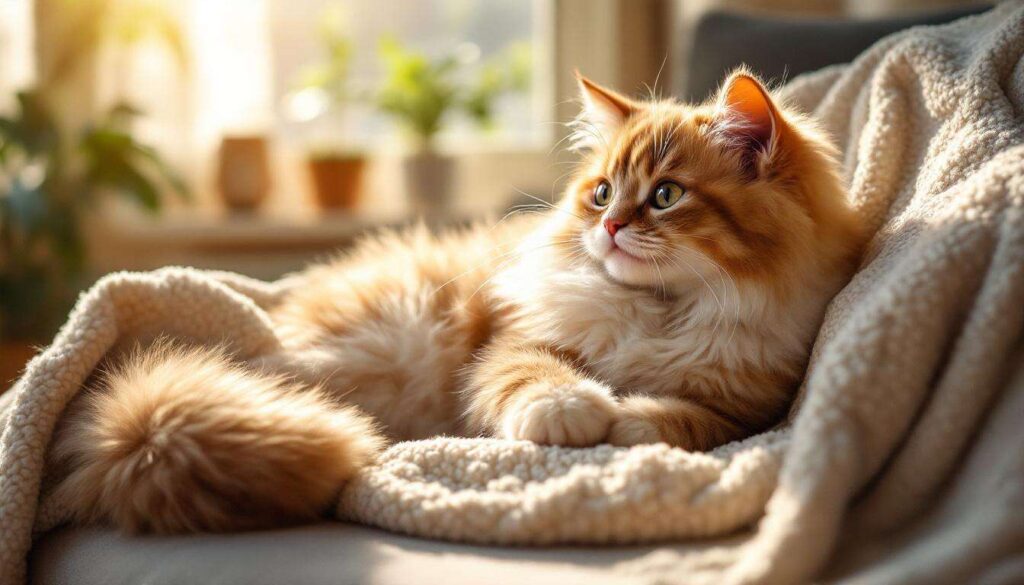
Every cat owner has experienced it: your feline companion settles onto your lap, presses their paws rhythmically into your legs, and begins what looks like an elaborate massage session. This behavior, affectionately known as “making biscuits,” is one of the most endearing yet puzzling actions cats perform. While it might seem like random movement, kneading reveals fascinating insights into your cat’s emotional state, instinctive behaviors, and the bond they share with you.
What is cat kneading ?
The physical mechanics of kneading
Cat kneading is a repetitive pushing motion where cats alternately press their front paws into soft surfaces. The action resembles a baker kneading dough, which explains the charming “making biscuits” nickname. During this behavior, cats typically:
- Extend and retract their claws in rhythm with each push
- Alternate between left and right paws in a steady pattern
- Often purr loudly throughout the kneading session
- Display a relaxed, half-closed eye expression
- Sometimes drool slightly due to extreme contentment
Common surfaces cats choose for kneading
Cats demonstrate particular preferences when selecting kneading surfaces. Most felines gravitate toward soft, pliable materials that yield under pressure. Popular choices include blankets, pillows, plush furniture, and most notably, their human companions. Some cats knead exclusively on their owners, while others practice this behavior on various household items. The texture and warmth of the surface often influence whether a cat will knead, with warmer, softer materials proving most attractive.
Understanding what kneading looks like helps cat owners recognize this behavior, but the more intriguing question involves where this instinct originates.
Origins of kneading behavior
Kittenhood nursing instincts
The roots of kneading trace back to a cat’s earliest days. Newborn kittens instinctively knead their mother’s belly while nursing to stimulate milk flow from the mammary glands. This pressing motion encourages lactation and helps kittens access the nourishment they need. The association between kneading and the comfort of nursing creates a powerful positive memory that persists into adulthood.
Evolutionary advantages of the behavior
Beyond nursing, kneading served practical purposes for wild cat ancestors. Feral cats knead grass and foliage to create comfortable sleeping areas, checking for threats like snakes or insects hidden in vegetation. This behavior also helps cats:
- Soften and flatten rough terrain for resting
- Test ground stability before settling down
- Create nests for giving birth
- Mark territory through scent glands in their paw pads
These ancestral survival behaviors remain encoded in domestic cats’ DNA, manifesting as the kneading we observe today.
The evolutionary background of kneading explains its persistence, but understanding why cats direct this behavior toward humans requires examining the human-feline relationship more closely.
Why do cats knead on us ?
Scent marking and territory claims
When your cat kneads on you, they’re doing more than showing affection. Cats possess scent glands in their paw pads that release pheromones during kneading. By pressing their paws against you repeatedly, cats deposit their unique scent, essentially marking you as part of their territory. This behavior communicates to other animals that you belong to them, establishing ownership in the feline social hierarchy.
Recreating maternal comfort
Adult cats who knead on their owners are recreating the security they felt as kittens with their mothers. Your warmth, softness, and presence trigger these deep-rooted memories of nursing and maternal care. When a cat kneads on you, they’re essentially treating you as a parental figure, demonstrating the profound trust they place in you.
Preparing a comfortable resting spot
Practical considerations also motivate kneading behavior. Before settling down for a nap on your lap, cats often knead to create the most comfortable position possible. This instinct mirrors their wild ancestors’ behavior of preparing sleeping areas. Your cat is literally making their bed before lying down, adjusting your body or clothing to achieve optimal comfort.
| Reason for Kneading | Behavioral Indicator |
|---|---|
| Scent marking | Kneading followed by rubbing face on you |
| Seeking comfort | Kneading accompanied by purring and closed eyes |
| Preparing to rest | Kneading followed immediately by lying down |
| Showing affection | Kneading while making eye contact |
These various motivations reveal that kneading serves multiple purposes simultaneously, but the emotional component deserves special attention.
Kneading: a sign of comfort and affection
The trust factor in kneading behavior
Kneading represents one of the highest compliments a cat can give. Cats only knead when they feel completely safe and relaxed. If your cat kneads on you, they’re demonstrating absolute trust in your presence. This vulnerability indicates they view you as a source of security rather than a potential threat. Cats who have experienced trauma or abuse may take longer to develop kneading behaviors, making this action even more meaningful when it occurs.
Reading your cat’s emotional state through kneading
The intensity and duration of kneading sessions provide valuable insights into your cat’s emotional well-being. Gentle, slow kneading typically indicates contentment and relaxation. More vigorous kneading might suggest excitement or heightened affection. Cats who knead frequently generally experience lower stress levels and feel secure in their environment. Conversely, a sudden cessation of kneading behavior might signal discomfort, illness, or environmental stressors requiring attention.
While kneading clearly benefits the human-cat bond, this behavior also provides specific advantages for the feline performing it.
The benefits of kneading for the cat
Stress relief and emotional regulation
Kneading functions as a natural stress-reduction mechanism for cats. The repetitive motion and associated purring create a meditative state that helps cats manage anxiety and process emotions. Similar to how humans might engage in repetitive activities like knitting or fidgeting to calm themselves, cats use kneading to self-soothe during overwhelming situations or simply to maintain emotional equilibrium.
Physical exercise and muscle maintenance
The pushing motion involved in kneading provides valuable physical benefits. This activity:
- Stretches and exercises the muscles in the paws, legs, and shoulders
- Maintains flexibility in the joints and tendons
- Keeps claw sheaths healthy through regular extension and retraction
- Promotes circulation in the paws and lower limbs
Communication and social bonding
Beyond individual benefits, kneading strengthens social connections. When cats knead on their owners, they’re actively reinforcing the bond between human and feline. This behavior releases endorphins in both the cat and often in the human receiving the kneading, creating a positive feedback loop that deepens the relationship. Multi-cat households may also observe cats kneading on each other, demonstrating affection and social hierarchy within their group.
Understanding these benefits helps cat owners appreciate kneading’s importance, but knowing how to respond appropriately ensures positive experiences for everyone involved.
How to respond to your cat’s kneading ?
Managing claws during kneading sessions
While kneading demonstrates affection, those sharp claws can cause discomfort or damage clothing. Consider these solutions:
- Keep your cat’s claws trimmed regularly to minimize scratching
- Place a thick blanket on your lap before your cat settles down
- Gently press on your cat’s paw pads to retract extended claws
- Use nail caps as a temporary solution for particularly enthusiastic kneaders
- Never punish or push your cat away abruptly, as this damages trust
Encouraging positive kneading experiences
Creating an environment that welcomes kneading strengthens your bond with your cat. Designate soft surfaces where kneading is encouraged, such as specific blankets or cushions. When your cat begins kneading, respond with gentle petting and calm verbal affirmation. This positive reinforcement helps your cat associate kneading with pleasant interactions, encouraging the behavior to continue.
When to consult a veterinarian
Most kneading is perfectly normal, but certain changes warrant professional attention. Contact your veterinarian if you notice:
- Sudden cessation of previously regular kneading behavior
- Excessive kneading accompanied by signs of distress
- Kneading that seems compulsive or interferes with normal activities
- Pain or limping associated with kneading motions
- Behavioral changes occurring alongside altered kneading patterns
Cat kneading represents a beautiful intersection of instinct, emotion, and social bonding. This behavior connects your domestic cat to their wild ancestors while simultaneously demonstrating the trust and affection they feel toward you. By understanding the origins and meanings behind those rhythmic paw presses, cat owners can better appreciate this endearing quirk and respond in ways that strengthen the human-feline relationship. Whether your cat kneads gently or enthusiastically, with claws extended or retracted, they’re sharing a profound message of comfort, security, and love that transcends species boundaries.