



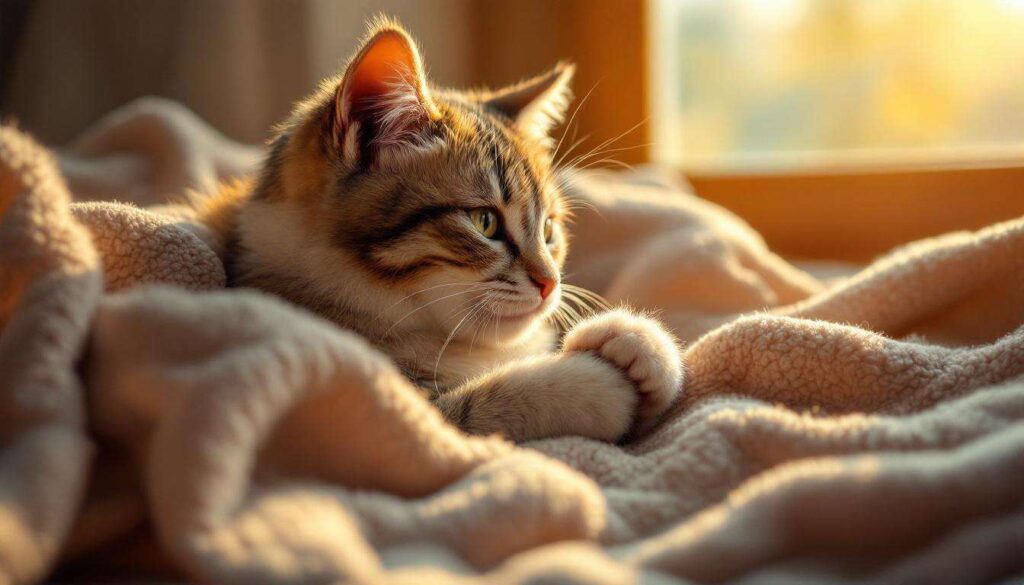
Cat owners worldwide have observed a peculiar yet endearing behavior: their feline companions rhythmically pressing their paws against soft surfaces, alternating between left and right in a motion resembling bread-making. This action, commonly known as kneading, often accompanies purring and appears to signal contentment. While most people associate this behavior with nursing kittens, it persists well into adulthood, prompting questions about its underlying causes and significance. Understanding why cats continue this kitten behavior throughout their lives reveals fascinating insights into feline psychology, emotional needs, and the evolutionary legacy that shapes their interactions with both their environment and their human companions.
Origins of kitten kneading
Nursing instincts in newborn kittens
The kneading behavior originates during the earliest days of a cat’s life. Newborn kittens instinctively knead their mother’s mammary glands to stimulate milk flow during nursing. This rhythmic pressing motion serves a crucial survival function, ensuring adequate nutrition during the vulnerable neonatal period. The action creates a positive feedback loop: kneading triggers milk letdown, which reinforces the behavior through immediate reward.
Research on feline development indicates that kittens begin exhibiting this behavior within hours of birth. The motion involves:
- Alternating pressure from left and right front paws
- Extension and retraction of claws into the soft surface
- Accompanying vocalizations or purring
- Focused attention on the nursing area
Neurological imprinting during critical development
The nursing period represents a critical developmental window during which behaviors become deeply embedded in the feline brain. Neurological studies suggest that repeated actions performed during early life create lasting neural pathways. The association between kneading, nourishment, and maternal comfort becomes hardwired into the cat’s behavioral repertoire. This imprinting explains why the behavior persists long after weaning, as the neural connections remain active throughout the cat’s lifetime.
Beyond the purely mechanical aspects of milk stimulation, kneading during kittenhood establishes fundamental associations that shape adult behavior patterns and emotional responses.
Functions of adult kneading
Marking territory through scent glands
Adult cats possess scent glands in their paw pads, and kneading serves as a territorial marking mechanism. When cats knead surfaces, they deposit pheromones that communicate ownership and familiarity. This olfactory signature remains imperceptible to humans but provides important information to other cats. The behavior represents a non-aggressive form of claiming space and establishing boundaries within their environment.
| Scent Gland Location | Primary Function | Behavioral Association |
|---|---|---|
| Paw pads | Territory marking | Kneading, scratching |
| Facial glands | Friendly marking | Head rubbing |
| Flank glands | Individual identification | Body rubbing |
Preparation of resting areas
Another practical function of adult kneading involves nest preparation. Wild feline ancestors would knead grass, leaves, and other vegetation to create comfortable resting spots. This behavior served to flatten the area, check for potential threats hidden in the undergrowth, and create a cushioned surface for sleeping. Domestic cats retain this instinctive behavior despite the availability of manufactured beds and soft furniture. The action demonstrates how evolutionary adaptations persist even when environmental pressures that originally shaped them no longer exist.
Physical stretching and muscle maintenance
Kneading also provides physical benefits for adult cats. The motion stretches the muscles, tendons, and ligaments in the front legs, shoulders, and back. Regular stretching maintains flexibility and prevents stiffness, particularly important for cats as they age. This functional aspect suggests that kneading serves multiple purposes simultaneously, combining emotional satisfaction with physical maintenance.
These practical functions complement the emotional dimensions of kneading, creating a complex behavior that addresses multiple needs.
The role of comfort and security
Regression to kittenhood experiences
When adult cats knead, they often appear to enter a trance-like state of contentment. This behavior represents a form of regression to the security and comfort of kittenhood. The action triggers memories and sensations associated with nursing, maternal warmth, and the safety of the litter. Cats typically knead when feeling relaxed and secure, suggesting the behavior serves as a self-soothing mechanism that recreates the emotional state of their earliest positive experiences.
Stress reduction and emotional regulation
Veterinary behaviorists recognize kneading as a coping mechanism that helps cats manage stress and anxiety. The repetitive motion has a calming effect similar to how humans might engage in rhythmic activities during stressful periods. Observations indicate that cats may increase kneading frequency during:
- Environmental changes or household disruptions
- Introduction of new pets or family members
- Recovery from illness or medical procedures
- Separation from familiar companions
The behavior provides emotional regulation by activating neural pathways associated with safety and satisfaction, effectively helping cats self-soothe during challenging circumstances.
Association with positive environments
Cats demonstrate selective kneading, choosing specific surfaces, locations, and even particular people. This selectivity indicates that the behavior reflects positive associations with the chosen target. A cat that kneads a specific blanket or person communicates trust and contentment. The discriminating nature of kneading reinforces its role as an indicator of emotional well-being rather than a random or meaningless action.
Understanding these comfort-seeking aspects helps explain why kneading often occurs in contexts that involve emotional connection and attachment.
Influence of instincts and emotions
Evolutionary persistence of juvenile behaviors
The continuation of juvenile behaviors into adulthood, known as neoteny, represents a common feature of domestication. Domestic cats retain many kitten-like characteristics throughout their lives, including vocalizations, play behaviors, and kneading. This retention occurs because domestication reduces selective pressure against juvenile traits. In wild populations, maintaining kitten behaviors into adulthood might prove disadvantageous, but in domestic settings, these traits often strengthen bonds with human caregivers who find them endearing.
Hormonal influences on kneading patterns
Hormonal states influence kneading frequency and intensity. Female cats in estrus may exhibit increased kneading as part of their reproductive behavior repertoire. Similarly, cats experiencing hormonal fluctuations due to medical conditions or treatments may show changes in kneading patterns. The behavior’s connection to hormonal states underscores its deep integration into the feline neurological and endocrine systems.
Individual personality variations
Not all cats knead with equal frequency or intensity. Personality differences account for significant variation in this behavior:
- Confident, secure cats often knead more frequently
- Cats weaned early may knead more intensely or persistently
- Anxious cats might knead as a coping strategy
- Some cats rarely or never knead despite normal development
These individual differences reflect the complex interplay between genetics, early experiences, and personality traits that shape each cat’s behavioral profile.
Recognizing how instincts and emotions drive kneading naturally leads to examining how this behavior affects relationships with human companions.
Impact on the bond with humans
Expression of trust and affection
When a cat kneads on a person, it represents a significant display of trust and affection. The behavior indicates that the cat views the human as a source of comfort and security, similar to how they perceived their mother during kittenhood. This transference of attachment demonstrates the depth of the human-feline bond. Pet owners often report feeling honored when their cats knead on them, recognizing the behavior as a form of feline affection.
Communication of contentment
Kneading serves as non-verbal communication between cats and humans. The behavior, especially when accompanied by purring and relaxed body language, clearly communicates satisfaction and happiness. Understanding this communication helps humans recognize when their cats feel content, strengthening the relationship through improved mutual understanding. This feedback loop encourages behaviors that promote feline well-being.
Challenges posed by claw extension
Despite its positive emotional significance, kneading can present practical challenges. Cats naturally extend their claws during kneading, which may cause discomfort or damage to:
- Human skin and clothing
- Upholstery and bedding
- Delicate fabrics and materials
This physical aspect can create tension in the human-cat relationship if not properly managed, though the behavior itself remains a positive indicator of bonding and affection.
Recognizing both the benefits and challenges of kneading naturally raises questions about appropriate management strategies.
How to encourage or limit this behavior
Creating appropriate kneading surfaces
For owners who appreciate their cat’s kneading but want to protect furniture and skin, providing designated kneading surfaces offers an effective solution. Soft blankets, fleece throws, or specialized cat beds can be placed in areas where cats typically knead. Encouraging cats to knead these items rather than delicate surfaces preserves the behavior while minimizing damage.
Managing discomfort from claws
Several strategies can reduce discomfort caused by claw extension during kneading without eliminating the behavior:
- Regular nail trimming to maintain blunt claw tips
- Placing a thick blanket between the cat and your lap
- Using nail caps that cover sharp claw points
- Gently repositioning the cat when kneading becomes uncomfortable
These approaches allow cats to express their natural behavior while protecting humans and household items from scratches.
When to discourage excessive kneading
In some cases, excessive kneading may indicate underlying issues requiring attention. If a cat kneads compulsively, particularly when accompanied by other behavioral changes, consultation with a veterinarian may be warranted. Excessive kneading might signal:
| Behavioral Sign | Possible Indication | Recommended Action |
|---|---|---|
| Compulsive kneading with vocalization | Anxiety or stress | Environmental assessment |
| Kneading with nursing behavior on fabrics | Early weaning effects | Behavioral consultation |
| Sudden increase in kneading frequency | Medical discomfort | Veterinary examination |
Respecting natural feline behavior
Most importantly, owners should recognize that kneading represents normal, healthy feline behavior. Attempts to completely eliminate kneading may cause stress and damage the human-cat relationship. Instead, management strategies should focus on accommodation and redirection rather than suppression. Understanding the behavior’s origins and functions helps owners appreciate its significance and respond appropriately to their cat’s emotional needs.
Cat kneading represents a fascinating example of how early-life behaviors persist into adulthood, serving multiple functions that range from territorial marking to emotional regulation. This behavior, rooted in the nursing instinct, continues throughout a cat’s life because it addresses ongoing needs for comfort, security, and communication. The persistence of kneading demonstrates the lasting influence of kittenhood experiences and the complex emotional lives of domestic cats. For humans sharing their lives with feline companions, understanding kneading enhances appreciation for these animals’ behavioral repertoire and strengthens the bonds formed through mutual trust and affection. Rather than viewing kneading as a problematic habit requiring elimination, recognizing it as a natural expression of feline contentment allows for better accommodation and deeper connection between cats and their human families.