


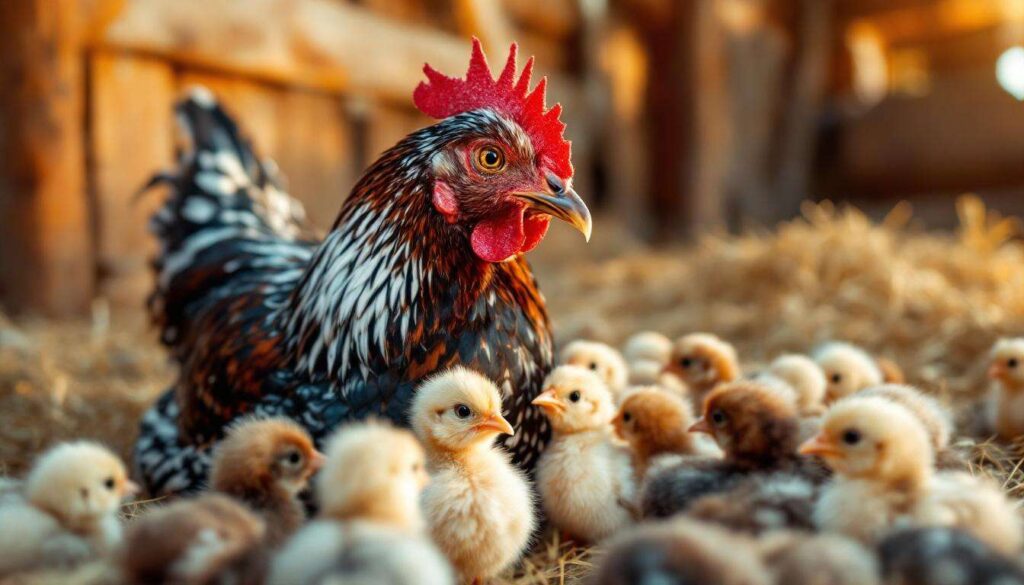
The barnyard may seem like a simple place, but beneath the clucking and pecking lies a sophisticated system of recognition and bonding. Mother hens possess remarkable abilities to identify their own offspring among dozens of chicks, rejecting those that don’t belong to them. This selective behavior isn’t random or cruel—it’s rooted in evolutionary biology and sensory capabilities that scientists are only beginning to fully understand. The maternal instinct in poultry demonstrates complex cognitive processes that challenge our assumptions about avian intelligence.
The sensory system of hens: an innate sense of identification
Neurological foundations of recognition
Hens possess a highly developed sensory system that enables them to distinguish their chicks from others within hours of hatching. Their brain structure includes specialized regions dedicated to processing social information and forming memories of their offspring. The avian hippocampus plays a crucial role in this recognition process, storing sensory templates that the hen uses as reference points.
Research has shown that hens begin forming these recognition patterns during the final days of incubation. The neurological pathways responsible for maternal bonding activate before the chicks even emerge from their shells, preparing the mother for immediate identification upon hatching.
Multi-sensory integration
The recognition system relies on multiple sensory inputs working simultaneously:
- Auditory processing centers that analyze chick vocalizations
- Visual cortex regions that memorize physical characteristics
- Olfactory receptors that detect unique chemical signatures
- Tactile sensors that register physical contact patterns
This multi-layered approach creates a comprehensive profile of each chick, making misidentification extremely rare. The integration of these sensory streams occurs rapidly, often within the first 24 hours after hatching.
Understanding these biological mechanisms provides insight into how hens communicate with their young through various channels.
Vocal communication between the mother hen and her chicks
Pre-hatching acoustic bonding
The relationship between a hen and her chicks begins before birth through vocal exchanges. During the final days of incubation, embryonic chicks produce soft peeping sounds from within their eggs. The mother hen responds with low-frequency clucks, establishing an acoustic dialogue that forms the foundation of their bond.
This pre-hatching communication serves multiple purposes. It synchronizes hatching times among the clutch and allows the hen to memorize the unique vocal signatures of her developing offspring. Studies using spectrographic analysis reveal that each chick produces slightly different call patterns, which the mother learns to recognize individually.
Post-hatching vocal repertoire
Once hatched, the vocal communication system becomes more sophisticated. Hens employ a diverse range of calls to manage their brood:
| Call Type | Purpose | Frequency Range |
|---|---|---|
| Food calls | Alerting chicks to feeding opportunities | 2-4 kHz |
| Alarm calls | Warning of predators or danger | 3-5 kHz |
| Contact calls | Maintaining proximity with the brood | 1-3 kHz |
| Brooding calls | Inviting chicks under wings for warmth | 0.5-2 kHz |
Chicks respond specifically to their mother’s voice, showing preferential reactions to her calls over those of unfamiliar hens. This selective responsiveness demonstrates that recognition is bidirectional—both mother and offspring identify each other through sound.
While vocalizations provide crucial identification cues, hens also rely heavily on what they can see and smell.
Visual and olfactory signs: how the hen recognizes her young
Visual recognition patterns
Hens possess excellent visual acuity and can distinguish subtle differences in appearance among chicks. Their eyes contain a higher density of cone cells than human eyes, allowing them to perceive colors and patterns with greater precision. A mother hen memorizes specific visual characteristics of her offspring, including:
- Down coloration and patterning variations
- Body size and proportions
- Movement patterns and gait
- Behavioral quirks unique to individual chicks
The visual imprinting process occurs rapidly during the critical period immediately following hatching. Hens that are separated from their chicks during this window may fail to recognize them later, highlighting the importance of early visual exposure.
Chemical signatures and olfactory recognition
Recent research has revealed that hens possess a more sophisticated sense of smell than previously understood. Each chick produces a unique chemical signature through preen gland secretions and natural body odors. The mother hen detects these olfactory markers and incorporates them into her recognition system.
The uropygial gland, located near the base of the tail, produces oils that chicks spread across their down during preening. These oils contain individual chemical profiles that serve as olfactory identification tags. Experiments blocking a hen’s olfactory receptors have shown reduced recognition accuracy, confirming the importance of smell in maternal identification.
These recognition mechanisms serve a deeper biological purpose rooted in survival instincts.
The protective instinct: why hens reject foreign chicks
Evolutionary advantages of selective care
The rejection of non-offspring isn’t arbitrary—it represents an evolutionary adaptation that maximizes reproductive success. Raising chicks requires enormous energy investment, including constant vigilance, food sharing, and protection from predators. By focusing resources exclusively on their genetic offspring, hens ensure their own genes are passed to the next generation.
This behavior, known as kin selection, is common across many species. Hens that indiscriminately accepted all chicks would waste valuable resources on unrelated individuals, potentially compromising the survival of their own offspring.
Resource competition and brood size management
Practical considerations also drive rejection behavior. A hen can effectively care for only a limited number of chicks. Adding foreign chicks to her brood would:
- Increase competition for food and maternal attention
- Strain the hen’s physical capacity to provide warmth
- Elevate stress levels within the brood
- Potentially introduce diseases from other flocks
Hens demonstrate remarkable accuracy in identifying imposters, typically rejecting them through aggressive pecking or simply refusing to respond to their calls. This selective response ensures optimal conditions for her legitimate offspring.
Scientific investigation has provided concrete evidence supporting these behavioral observations.
Scientific studies on maternal attachment in poultry
Landmark research findings
Behavioral scientists have conducted extensive research on hen-chick recognition over several decades. A pivotal study published in the 1990s used cross-fostering experiments to test recognition limits. Researchers swapped chicks between hens at various time points after hatching, revealing that:
| Time of Swap | Acceptance Rate | Recognition Method |
|---|---|---|
| 0-6 hours post-hatch | 85% | Primarily olfactory |
| 6-24 hours post-hatch | 45% | Visual and vocal combined |
| 24+ hours post-hatch | 12% | All sensory systems integrated |
These findings demonstrate that recognition becomes increasingly sophisticated and accurate as the bond strengthens over time.
Neurobiological investigations
Modern neuroscience techniques have allowed researchers to examine the brain activity of hens during recognition tasks. Functional imaging studies show heightened activity in specific brain regions when hens encounter their own chicks versus foreign ones. The medial striatum and arcopallium show particular activation patterns associated with positive recognition.
Hormonal studies have identified elevated oxytocin levels in hens caring for their chicks, similar to bonding hormones in mammals. This suggests that the emotional component of maternal care may be more universal across species than previously thought.
These scientific insights have practical applications for those who raise poultry.
Implications for raising and protecting hens and their chicks
Best practices for poultry farmers
Understanding hen recognition behavior enables farmers and backyard chicken keepers to implement better management strategies. When attempting to introduce orphaned chicks to a broody hen, timing is critical. The highest success rates occur when:
- Introduction happens during nighttime hours when hens are less alert
- Foster chicks are similar in age to the hen’s biological offspring
- The chicks are rubbed with material from the hen’s nest to transfer scent
- Introduction occurs within the first 48 hours after the hen’s own chicks hatch
Welfare considerations
Recognition of the sophisticated bonding process between hens and chicks has important welfare implications. Commercial operations that separate mothers from offspring immediately after hatching may cause significant stress to both parties. Alternative systems that allow hens to raise their chicks naturally result in:
- Improved chick survival rates
- Better immune system development in young birds
- Reduced stress-related behaviors in hens
- Enhanced natural behavioral expression
For small-scale operations and hobby farmers, respecting the natural recognition system means providing adequate space for hens to bond with their broods without interference. Minimizing disturbances during the critical first week allows the recognition process to develop fully, resulting in healthier, better-adjusted chickens.
The remarkable ability of hens to recognize their own chicks reveals the complexity of avian cognition and maternal behavior. Through integrated sensory systems involving vocal, visual, and olfactory cues, hens form strong bonds with their offspring while rejecting foreign chicks to conserve resources and maximize reproductive success. Scientific research continues to uncover the neurobiological mechanisms underlying these behaviors, providing valuable insights for both animal welfare and poultry management. Understanding and respecting these natural recognition processes benefits both the birds and those who care for them, highlighting the importance of evidence-based approaches to animal husbandry.