



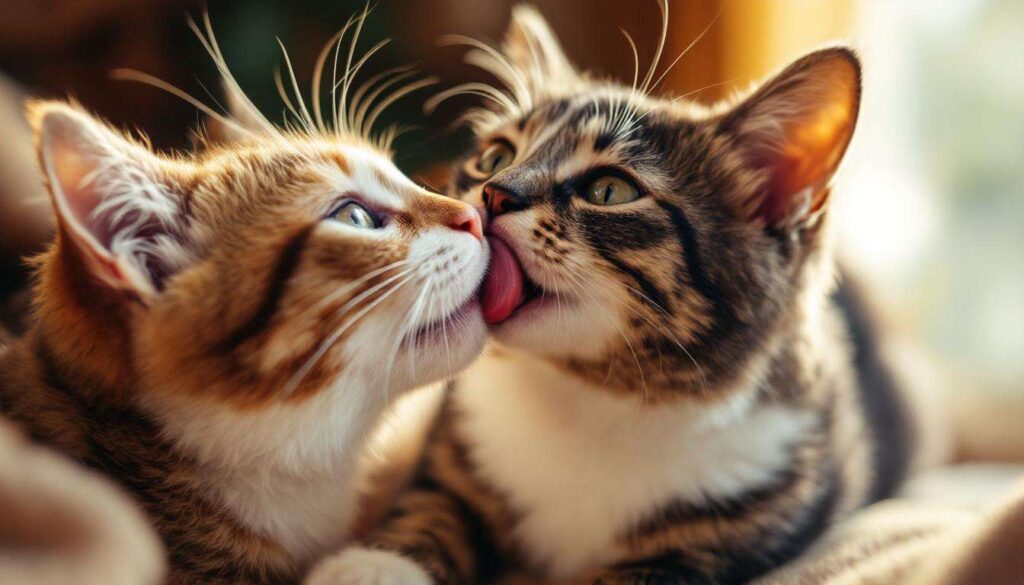
When your cat begins methodically licking your hair, this peculiar behavior might seem puzzling at first glance. Yet this grooming ritual carries profound significance in feline communication and social dynamics. Cats employ their tongues for far more than simple hygiene maintenance. Through licking, these sophisticated creatures express affection, establish hierarchical relationships, and communicate complex emotional states. Understanding the motivations behind this behavior offers valuable insights into the intricate world of feline psychology and strengthens the bond between humans and their companion animals.
The meaning of licking in cats
Instinctive grooming behaviors
Licking represents one of the fundamental behaviors cats learn from birth. Mother cats meticulously groom their kittens during the first weeks of life, establishing grooming as both a practical necessity and a social gesture. This maternal behavior serves multiple purposes beyond cleanliness:
- Stimulating circulation and digestive functions in newborn kittens
- Removing scents that might attract predators
- Creating familial bonds through physical contact
- Teaching offspring about social interactions within the group
As cats mature, they retain this grooming instinct and redirect it toward individuals they consider part of their social circle. The rough texture of a cat’s tongue, covered with tiny backward-facing barbs called papillae, makes it an efficient cleaning tool that removes dirt, loose fur, and debris.
Self-grooming versus social grooming
Cats dedicate approximately 30 to 50 percent of their waking hours to self-grooming activities. This extensive personal maintenance differs significantly from the grooming they direct toward others. When cats groom themselves, they focus on hygiene and temperature regulation. Social grooming, known scientifically as allogrooming, serves entirely different purposes centered on relationship building and communication.
| Grooming Type | Primary Purpose | Duration |
|---|---|---|
| Self-grooming | Hygiene and thermoregulation | Extended sessions |
| Social grooming | Bonding and communication | Brief, focused interactions |
This distinction helps explain why your cat might choose to lick your head specifically rather than simply cleaning themselves nearby. The behavior signals something deeper than basic hygiene needs.
Why does the cat lick your head ?
Affection and bonding displays
When your feline companion licks your head, this gesture typically demonstrates genuine affection and trust. Cats reserve this intimate behavior for individuals they perceive as family members or close allies. Your cat essentially treats you as another cat within their social group, extending the same grooming courtesies they would offer to feline companions.
The head and face represent particularly vulnerable areas for cats. By grooming your head, your cat expresses comfort with your presence and acknowledges you as a trusted member of their inner circle. This behavior often intensifies during moments of relaxation when your cat feels especially secure and content.
Scent marking and ownership
Beyond affection, head licking serves a territorial function. Cats possess scent glands throughout their bodies, including in their mouths. When licking your head, your cat deposits their unique scent signature, effectively claiming you as part of their territory. This scent marking accomplishes several objectives:
- Creating a familiar scent profile that comforts the cat
- Signaling to other animals that you belong to their social group
- Mixing your scent with theirs to establish a colony odor
- Reinforcing the cat’s sense of security within their environment
Taste and texture attraction
Practical considerations also influence this behavior. Human hair products, natural scalp oils, and even residual food scents can attract cats. The texture of human hair may remind cats of fur, triggering their grooming instincts. Some cats particularly enjoy the taste of certain hair products or the saltiness of perspiration on the scalp.
Understanding these multiple motivations provides context for interpreting your cat’s grooming behavior and recognizing the various messages they communicate through this action.
The role of grooming in feline social bonds
Hierarchical relationships
Within feline social structures, grooming patterns reveal hierarchical dynamics. Research indicates that cats typically groom individuals they perceive as having higher social status. When your cat licks your head, they may actually be acknowledging your position as the dominant member of the household, contrary to popular assumptions about feline independence.
This hierarchical grooming serves to maintain social harmony and reduce potential conflicts within the group. By grooming you, your cat reinforces peaceful coexistence and demonstrates submission or respect.
Stress reduction and comfort
Grooming activities trigger the release of endorphins in cats, creating feelings of pleasure and relaxation. When cats engage in social grooming, both the groomer and the recipient experience these calming effects. Your cat may lick your head when they feel anxious or stressed, using the familiar behavior to self-soothe.
Similarly, cats often groom their human companions when they detect stress or emotional distress in them. This nurturing behavior represents an attempt to provide comfort and reassurance, much as a mother cat would soothe her distressed kittens.
These social bonding functions demonstrate how deeply integrated grooming behaviors are within feline emotional and social frameworks, setting the stage for understanding the communicative aspects of this behavior.
Licking as a means of communication
Expressing emotional states
Cats utilize licking to convey various emotional messages that might otherwise remain unclear to their human companions. The intensity, duration, and context of licking sessions provide clues about your cat’s current emotional state:
- Gentle, rhythmic licking indicates contentment and affection
- Intense, focused licking may signal anxiety or overstimulation
- Brief licking episodes often represent greeting behaviors
- Prolonged sessions might indicate a need for attention or reassurance
Requesting attention or resources
Cats quickly learn which behaviors elicit responses from their human companions. If licking your head consistently results in attention, petting, or treats, your cat may employ this strategy as a deliberate communication tool. This learned behavior demonstrates feline intelligence and adaptability in securing desired outcomes.
Some cats develop specific licking patterns to communicate particular needs, such as hunger, desire for play, or requests to access certain areas of the home. Observing the circumstances surrounding licking episodes helps decode these individualized communication systems.
While these communication functions generally remain benign and even endearing, certain circumstances warrant closer attention to ensure the behavior stays within healthy parameters.
When licking can become problematic
Excessive grooming behaviors
When licking becomes compulsive or excessive, it may indicate underlying health or psychological issues. Obsessive licking can stem from various causes that require veterinary attention:
- Anxiety disorders or chronic stress
- Obsessive-compulsive disorder in cats
- Neurological conditions affecting behavior regulation
- Pain or discomfort redirected into grooming behaviors
Cats experiencing these issues may lick not only their human companions but also themselves to the point of creating bald patches or skin lesions. The repetitive nature of the behavior and inability to be easily distracted distinguish problematic licking from normal social grooming.
Medical concerns
Several medical conditions can manifest as increased licking behavior. Dental problems, gastrointestinal discomfort, or nutritional deficiencies might drive cats to lick unusual surfaces or increase grooming activities. If your cat suddenly intensifies head-licking behavior or begins licking obsessively, consult a veterinarian to rule out underlying medical causes.
Impact on human health
While generally harmless, cat saliva contains bacteria that can potentially cause infections, particularly in individuals with compromised immune systems. People with allergies may also experience reactions to proteins present in cat saliva. Additionally, excessive licking can damage hair and irritate scalp skin over time.
Recognizing when licking transitions from endearing behavior to problematic pattern enables appropriate intervention and management strategies.
Tips for managing excessive licking
Behavioral modification techniques
Managing excessive licking requires patience and consistency. Several strategies can help redirect this behavior without damaging your bond with your cat:
- Gently redirect your cat’s attention when licking begins
- Provide alternative activities like interactive toys or puzzle feeders
- Establish predictable routines that reduce anxiety
- Avoid reinforcing the behavior with attention or treats
- Create positive associations with alternative behaviors
Never punish your cat for licking, as this can damage trust and potentially worsen anxiety-related behaviors. Instead, focus on positive reinforcement when your cat chooses alternative activities.
Environmental enrichment
Boredom and understimulation often contribute to excessive grooming behaviors. Enhancing your cat’s environment addresses these underlying causes:
| Enrichment Type | Examples | Benefits |
|---|---|---|
| Physical activity | Climbing trees, toys, play sessions | Reduces stress and boredom |
| Mental stimulation | Puzzle feeders, training exercises | Engages natural hunting instincts |
| Social interaction | Regular play, grooming sessions | Fulfills bonding needs |
Professional intervention
When behavioral modification proves insufficient, consulting professionals becomes necessary. Veterinary behaviorists can assess your cat’s specific situation and recommend targeted interventions, which may include anxiety medications, pheromone therapy, or specialized behavior modification protocols. Early intervention prevents behaviors from becoming deeply ingrained habits that prove difficult to modify.
Cat head-licking embodies the complex intersection of instinct, social bonding, and communication within feline behavior. This grooming ritual typically signals affection, trust, and social integration, reflecting your cat’s perception of you as a valued family member. While generally representing positive emotional connections, monitoring the behavior’s frequency and intensity ensures it remains within healthy boundaries. By understanding the multiple meanings behind this behavior and recognizing when intervention becomes necessary, cat owners can nurture strong, healthy relationships with their feline companions while respecting both species’ needs and boundaries.