


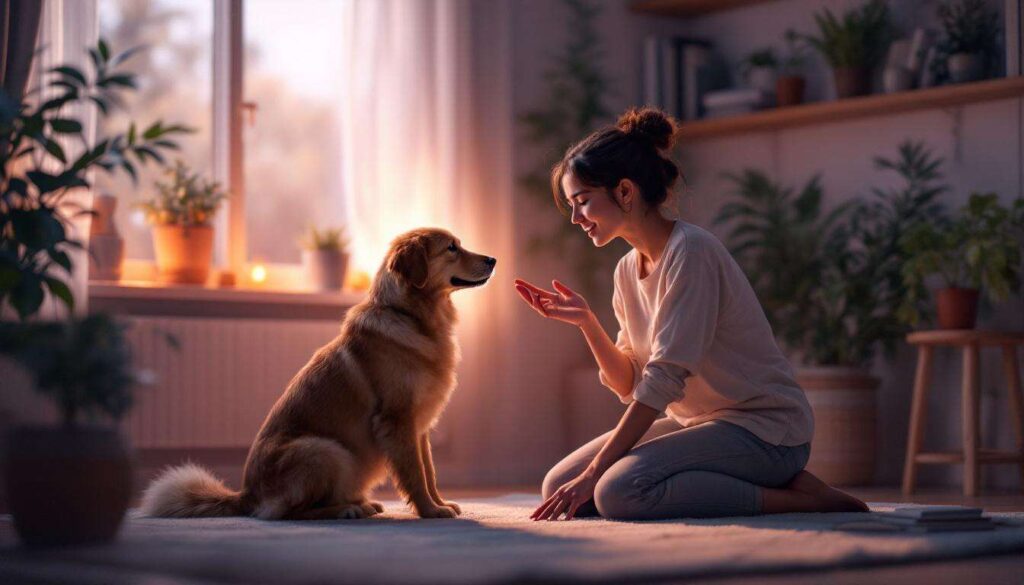
Many pet owners find themselves chatting with their furry companions as if they were human friends, sharing daily frustrations, asking questions, and even seeking advice. This behavior, far from being unusual, reflects deeper psychological patterns that reveal much about the human need for connection and expression. Research suggests that people who engage in these conversations with their pets often exhibit specific personality traits and emotional characteristics that set them apart. Understanding these traits offers insight into the complex relationship between humans and animals, while also highlighting the important role pets play in our emotional lives.
Communication that’s not so strange
The normalcy of pet conversations
Speaking to pets as if they understand complex human language is remarkably common across cultures and demographics. Studies indicate that approximately 80% of pet owners regularly engage in conversations with their animals, treating them as responsive participants rather than passive listeners. This behavior transcends age, gender, and socioeconomic boundaries, suggesting it fulfills a fundamental human need.
Pet owners who talk to their animals frequently demonstrate several characteristics that make this behavior feel natural. These individuals often possess high levels of social intelligence, which paradoxically makes them more likely to project human-like qualities onto non-human companions. The traits commonly observed include:
- Enhanced empathy and emotional awareness
- Strong imaginative capabilities
- Comfort with unconventional social interactions
- Reduced concern about social judgment
- Greater openness to experience
The science behind one-sided dialogues
Neuroscientific research reveals that when people talk to their pets, their brains activate similar regions involved in human social communication. The temporoparietal junction, responsible for understanding others’ perspectives, shows activity even when the “other” is a dog or cat. This suggests that pet conversations engage genuine social cognition processes rather than representing mere habit or eccentricity.
Interestingly, people who frequently converse with their pets often score higher on measures of theory of mind, the ability to attribute mental states to others. This cognitive skill enables them to imagine what their pet might be thinking or feeling, creating a more interactive experience even in the absence of verbal responses.
These conversational patterns also reflect broader tendencies in how certain individuals process and express emotions, leading naturally to considerations of how we attribute human characteristics to our animal companions.
Anthropomorphism in question
Understanding anthropomorphic tendencies
Anthropomorphism, the attribution of human traits to non-human entities, represents a fundamental cognitive mechanism that helps people make sense of the world around them. Pet owners who talk to their animals as humans typically demonstrate heightened anthropomorphic tendencies that extend beyond their relationships with pets. They may also name their cars, apologize to furniture they bump into, or perceive emotions in weather patterns.
| Trait | High Anthropomorphizers | Low Anthropomorphizers |
|---|---|---|
| Loneliness scores | Moderate to high | Low to moderate |
| Need for social connection | Above average | Average |
| Creativity measures | Significantly elevated | Average range |
| Empathy quotient | Higher than average | Average |
The role of imagination and creativity
People who engage in extensive pet conversations often possess rich imaginative lives that allow them to construct elaborate narratives around their animals’ behaviors and presumed thoughts. This creativity isn’t limited to pet interactions but often manifests in professional or artistic pursuits. These individuals can easily suspend disbelief and engage with alternative perspectives, making conversations with non-verbal companions feel meaningful and rewarding.
The tendency to anthropomorphize also correlates with reduced social cynicism. Pet conversationalists typically maintain optimistic views about relationships and connection possibilities, allowing them to find companionship in unconventional places without self-consciousness or embarrassment.
Beyond these cognitive patterns, the act of talking to pets provides substantial psychological rewards that benefit the human speaker in measurable ways.
Emotional benefits for the owner
Stress reduction and emotional regulation
Conversing with pets serves as a powerful stress management tool for many owners. The act of verbalizing thoughts and feelings, even to a non-judgmental listener, helps organize emotions and reduce psychological burden. Research demonstrates that talking to pets can lower cortisol levels and decrease blood pressure, particularly when the conversation occurs in a calm, affectionate tone.
Pet owners who regularly engage in these conversations report several emotional benefits:
- Decreased feelings of isolation and loneliness
- Improved mood regulation throughout the day
- Enhanced sense of being understood
- Reduced anxiety in stressful situations
- Greater emotional stability during difficult periods
The comfort of unconditional acceptance
Unlike human relationships that involve complex social dynamics and potential judgment, pets offer unwavering acceptance regardless of what is said to them. This creates a psychologically safe space where owners can express thoughts they might censor in human interactions. People who talk extensively to their pets often value this non-judgmental quality above all others, finding freedom in expressing themselves without fear of criticism or misunderstanding.
The emotional validation derived from these interactions, though one-sided in verbal terms, feels genuine to the speaker. Pets respond with body language, vocalizations, and attention that owners interpret as engagement, creating a feedback loop that reinforces the conversational behavior and provides genuine comfort.
These emotional advantages naturally contribute to deeper connections between pets and their owners, creating relationships that transcend simple companionship.
Strengthening the bond with the pet
Creating mutual understanding through dialogue
Regular conversation with pets significantly enhances the quality of the human-animal bond. Owners who talk to their pets frequently develop more attuned relationships, becoming better at reading subtle behavioral cues and responding to their animals’ needs. This heightened awareness creates a positive cycle where increased communication leads to stronger attachment, which in turn encourages more interaction.
The characteristics that facilitate this bonding process include:
- High levels of patience and attentiveness
- Willingness to invest emotional energy in the relationship
- Capacity for consistent caregiving behaviors
- Appreciation for non-verbal communication forms
- Commitment to viewing the pet as a family member
Behavioral outcomes and relationship quality
Pets whose owners regularly talk to them often display increased responsiveness and engagement. While they may not understand the literal content of human speech, they respond to tone, emotion, and attention. This creates relationships characterized by mutual responsiveness that benefits both parties. Dogs, in particular, show enhanced obedience and cooperation when their owners maintain consistent verbal communication.
Studies using attachment theory frameworks reveal that pet owners who engage in frequent conversation develop secure attachment patterns with their animals, similar to healthy human relationships. These bonds provide stability and comfort that extend beyond basic caregiving, creating genuine companionship that fulfills deep psychological needs.
The strength of these connections often transforms casual conversations into something more profound, serving purposes that extend into the realm of mental health and personal well-being.
When conversation becomes therapeutic
Pets as informal therapists
For many individuals, talking to pets functions as a form of informal therapy that complements or sometimes substitutes for professional mental health support. The act of verbalizing problems, fears, and hopes to a pet creates opportunities for self-reflection and emotional processing that might not occur otherwise. People who use their pets as therapeutic listeners often possess strong self-awareness and recognize the value of expression even without direct feedback.
The therapeutic benefits manifest in several ways:
- Clarification of confused thoughts through verbalization
- Safe rehearsal of difficult conversations before having them with humans
- Processing of traumatic or stressful experiences
- Maintenance of verbal skills during periods of social isolation
- Development of self-compassion through caring dialogue
Recognition by mental health professionals
Mental health practitioners increasingly recognize the legitimate therapeutic value of pet conversations. Animal-assisted therapy programs incorporate this understanding, encouraging clients to verbalize feelings to therapy animals as part of treatment protocols. The non-threatening nature of these interactions allows people to access emotions they might suppress in purely human contexts.
Individuals who naturally gravitate toward conversing with their pets often demonstrate emotional intelligence and self-care awareness. They recognize their own needs for expression and connection, seeking fulfillment in available relationships rather than waiting for ideal circumstances. This proactive approach to emotional well-being represents psychological resilience and adaptive coping.
The psychological profiles of people who talk to their pets reveal individuals who are empathetic, creative, emotionally aware, and unafraid to forge meaningful connections in unconventional ways. These conversations, far from indicating eccentricity, demonstrate healthy emotional expression and the human capacity to find companionship and comfort across species boundaries. The traits shared by these pet owners highlight strengths rather than peculiarities, showing that talking to animals reflects sophisticated social cognition and emotional intelligence. As research continues to validate the benefits of human-animal communication, these conversations deserve recognition as legitimate and valuable forms of social interaction that enhance both human and animal well-being.