



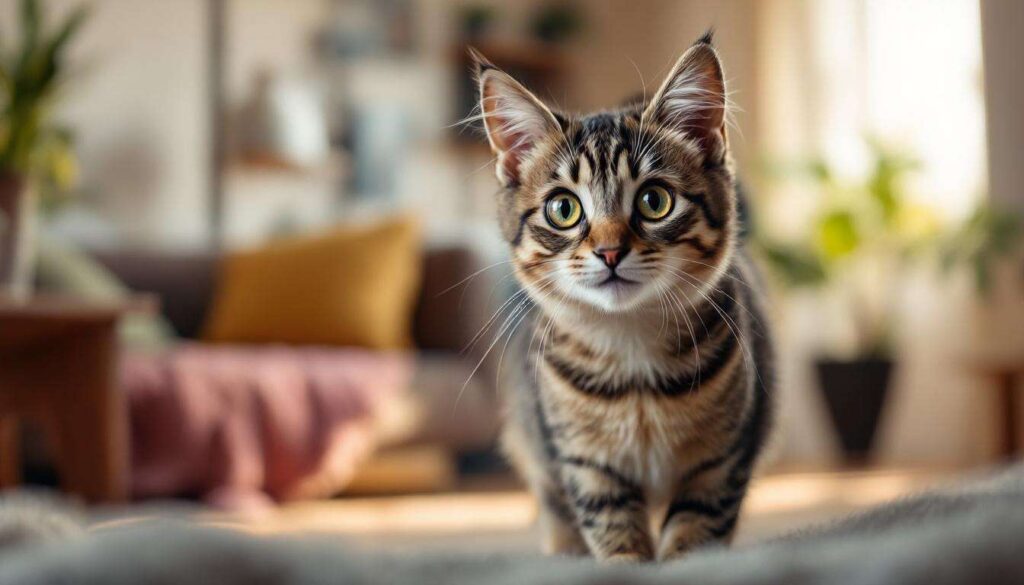
Cat owners worldwide share a common experience: their feline companions seem magnetically drawn to follow them from room to room. This behavior, often perceived as endearing yet puzzling, has sparked scientific curiosity. Recent research from the University of Queensland has shed light on this phenomenon, revealing insights into the complex relationship between cats and their human caregivers. Understanding why cats exhibit this shadowing behavior requires examining multiple factors, from evolutionary instincts to emotional bonds that develop over time.
Reasons behind cats’ behavior
Territorial instincts and security needs
Cats are inherently territorial creatures, and their tendency to follow owners stems partly from their need to monitor their environment. When humans move through shared living spaces, cats perceive this as potential changes to their territory. By following their owners, felines maintain awareness of activities within their domain and ensure no threats have emerged.
This behavior also reflects a cat’s security-seeking nature. Despite their reputation for independence, cats view their owners as sources of safety and protection. Following their human provides reassurance, especially in multi-pet households or environments with unfamiliar stimuli.
Resource dependency and feeding associations
Practical considerations play a significant role in following behavior. Cats quickly learn that their owners control access to essential resources:
- Food and treats
- Fresh water supplies
- Access to outdoor spaces
- Interactive toys and play sessions
- Comfortable resting spots like warm laps
This learned association creates a behavioral pattern where cats anticipate their needs being met through proximity to their owners. The behavior becomes reinforced each time following results in a positive outcome, whether feeding time, play, or affection.
Social bonding and attachment formation
Contrary to outdated stereotypes portraying cats as aloof, research demonstrates that felines form genuine social bonds with their caregivers. Following behavior represents one manifestation of this attachment. Cats who have developed strong relationships with their owners seek their presence not merely for practical reasons but for companionship itself.
These social dynamics become particularly evident when examining how cats select which household member to follow most frequently, often choosing the person who provides the most consistent care and positive interactions.
Beyond these fundamental motivations, the emotional dimensions of cat-owner relationships reveal even deeper connections that influence feline behavior patterns.
The emotional impact of cats on their owners
Psychological benefits of feline companionship
The presence of cats provides measurable psychological advantages for their owners. Studies have documented reductions in stress hormones, decreased blood pressure, and improved mood among individuals who regularly interact with their feline companions. When cats follow their owners, they create opportunities for spontaneous interactions that amplify these benefits throughout the day.
The predictable nature of a cat’s following behavior also provides emotional stability and routine, particularly valuable for individuals living alone or managing mental health challenges. Knowing a cat will greet them at the door or follow them to bed creates comforting patterns in daily life.
Reciprocal emotional exchanges
The relationship between cats and owners involves bidirectional emotional communication. Owners interpret their cat’s following behavior as affection and loyalty, which strengthens their own attachment. This interpretation, whether entirely accurate or not, generates positive feelings that owners then express through increased attention and care.
| Owner Emotion | Behavioral Response | Cat’s Reaction |
|---|---|---|
| Feeling valued | Increased petting and talking | More following behavior |
| Sense of purpose | Enhanced caregiving activities | Stronger attachment formation |
| Reduced loneliness | More quality time together | Greater social confidence |
This reciprocal dynamic creates a reinforcing cycle where both parties benefit emotionally, deepening the bond over time and encouraging continued proximity-seeking behavior from the cat.
Scientific investigation into these behavioral patterns has provided concrete evidence supporting what cat owners have long observed anecdotally.
University of Queensland study: methodology and results
Research design and participant selection
The University of Queensland research team employed a comprehensive approach to studying cat-owner dynamics. Researchers recruited participants with varying levels of cat ownership experience and observed feline behavior across different household environments. The study utilized direct observation, video recording, and owner-reported questionnaires to gather multifaceted data.
Participants included cats of different ages, breeds, and backgrounds, ensuring the findings would reflect the broader feline population rather than specific subgroups. This diversity strengthened the generalizability of conclusions drawn from the research.
Key findings on attachment behaviors
The research revealed several significant patterns in cat following behavior:
- Approximately 65% of observed cats demonstrated consistent following patterns with their primary caregiver
- Following intensity increased during specific times, particularly morning and evening hours
- Cats exhibited selective following, choosing particular household members based on relationship quality
- Environmental factors, including home size and layout, influenced following frequency
- Cats with secure attachment styles followed more consistently than those with anxious or avoidant patterns
These findings challenged assumptions about feline independence while confirming that cats develop individualized relationships with their owners comparable to those observed in other domesticated species.
The study’s conclusions regarding attachment styles opened new avenues for understanding the nuanced social connections cats form with humans.
Analysis of social bonds between cats and humans
Attachment theory applied to feline relationships
Researchers applied established attachment theory frameworks to cat-human relationships, identifying patterns similar to those documented in human infant-caregiver bonds. Cats demonstrating secure attachment used their owners as safe bases from which to explore, returning periodically for reassurance. This manifests as following behavior when owners move between spaces.
Cats with insecure attachment patterns showed different following behaviors. Anxiously attached cats followed excessively, displaying distress when separated, while avoidantly attached cats maintained greater distance despite still monitoring owner movements.
Communication signals and behavioral cues
Following behavior serves as one component of broader communication systems cats use with their owners. When following, cats often combine physical proximity with vocalizations, tail positions, and eye contact to convey specific messages:
- Upright tail with slight curve indicates friendly intentions
- Chirping or trilling sounds suggest greeting or attention-seeking
- Slow blinking demonstrates trust and contentment
- Rubbing against legs marks territory and shows affection
Understanding these combined signals helps owners interpret their cat’s motivations more accurately when being followed throughout the home.
These research insights translate into practical applications that can enhance the daily experiences of cat owners.
Research implications for cat owners
Recognizing healthy versus problematic following
While following behavior typically indicates positive attachment, owners should distinguish between healthy companionship and separation anxiety. Healthy following includes the cat maintaining calm demeanor, ability to settle independently, and lack of distress when briefly separated. Problematic following involves excessive vocalization, destructive behavior when alone, and inability to relax without constant owner presence.
Owners observing concerning patterns should consult veterinary behaviorists to address potential anxiety disorders before they intensify.
Optimizing home environments
Research findings suggest environmental modifications can support healthy cat-owner relationships:
| Environmental Factor | Recommendation | Expected Benefit |
|---|---|---|
| Vertical spaces | Install cat trees and shelves | Allows observation without constant following |
| Multiple resource locations | Distribute food, water, litter boxes | Reduces resource-driven following |
| Enrichment activities | Provide puzzle feeders and toys | Encourages independent engagement |
These adjustments help cats feel secure and stimulated even when not directly beside their owners, promoting balanced attachment.
Applying research-based understanding enables owners to strengthen their relationships with their feline companions through informed interactions.
Tips for better understanding your feline
Observational techniques for owners
Developing deeper understanding of individual cats requires systematic observation of behavioral patterns. Owners should note when following behavior intensifies, which activities trigger increased proximity-seeking, and how their cat responds to different types of interaction. Maintaining a simple journal helps identify patterns that might otherwise go unnoticed.
Pay attention to context-specific behaviors: does your cat follow more when hungry, anxious, or simply seeking companionship ? Distinguishing these motivations allows for more appropriate responses.
Strengthening the human-feline bond
Research-informed strategies for enhancing relationships include:
- Establishing consistent daily routines that provide predictability
- Respecting your cat’s communication signals and personal space needs
- Engaging in interactive play sessions that mimic hunting behaviors
- Offering choices in interactions rather than forcing contact
- Creating positive associations through reward-based training
- Providing quiet companionship without constant handling
These approaches acknowledge cats as autonomous individuals with preferences while nurturing the attachment that motivates following behavior.
When to seek professional guidance
Certain situations warrant consultation with veterinary professionals or certified animal behaviorists. Sudden changes in following patterns may indicate health issues, particularly in senior cats. Excessive clinginess accompanied by vocalization or elimination problems suggests underlying anxiety requiring intervention. Professional assessment ensures appropriate treatment rather than misinterpreting behavioral changes.
The University of Queensland research has illuminated the complex motivations behind cats’ tendency to follow their owners, revealing a sophisticated interplay of instinct, learned behavior, and genuine emotional attachment. This behavior reflects territorial monitoring, resource anticipation, and most significantly, the social bonds cats form with their human caregivers. Understanding these dynamics allows owners to interpret their cats’ actions more accurately and respond in ways that strengthen healthy relationships. By recognizing the difference between secure attachment and anxiety-driven following, creating supportive environments, and applying research-based interaction strategies, cat owners can foster fulfilling companionship that benefits both species. The shadowing cat at your heels represents not mere dependence but a meaningful connection built through daily interactions and mutual trust.