



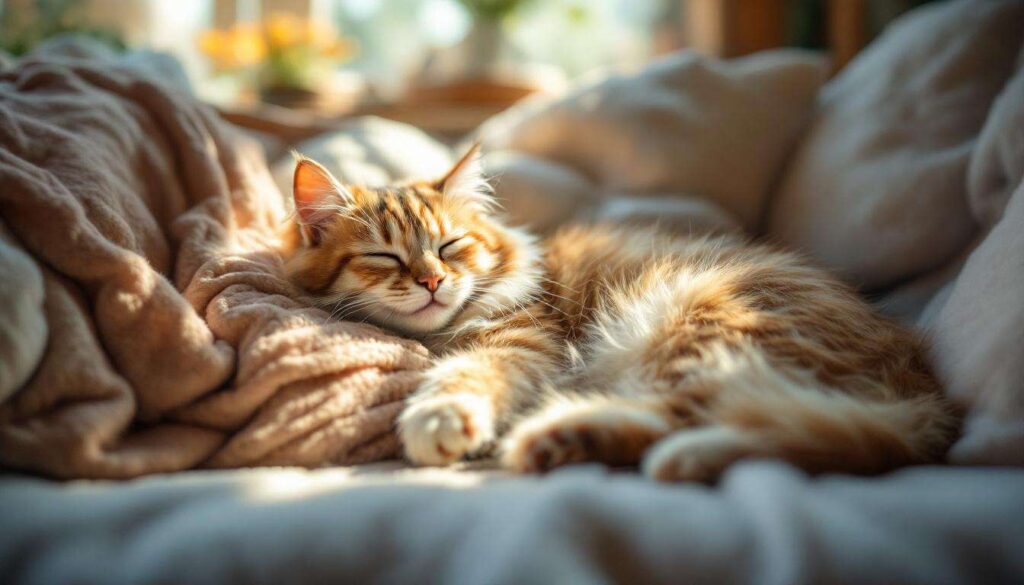
Cats communicate in subtle ways that often go unnoticed by their human companions. While dogs express their feelings through enthusiastic tail wagging and excited barking, felines prefer a more understated approach. Understanding these quiet signals can transform your relationship with your pet and help you recognize the deep bond you share. Many cat owners miss these meaningful gestures simply because they’re looking for more obvious displays of affection. Learning to read your cat’s body language reveals a rich vocabulary of love that has been there all along.
Slow blinks: a feline language of love
The science behind the cat kiss
When your cat looks at you and slowly closes their eyes, they’re sending you what animal behaviorists call a cat kiss. This deliberate gesture represents one of the most profound expressions of trust in the feline world. In nature, closing their eyes makes cats vulnerable to predators, so performing this action in your presence demonstrates complete confidence in your relationship. Research has shown that cats reserve this behavior for individuals they feel entirely safe with, making it a clear indicator of affection.
How to respond appropriately
You can communicate back to your cat using their own language by returning the slow blink. The technique involves:
- Making eye contact with your cat without staring aggressively
- Slowly closing your eyes for two to three seconds
- Opening them gently while maintaining a relaxed expression
- Repeating the gesture if your cat responds positively
This simple exchange can strengthen your bond and create moments of genuine connection throughout the day. Understanding this silent conversation opens the door to recognizing other subtle expressions of feline affection.
Head butting: a gesture of affection
The meaning behind bunting behavior
When your cat presses their head against your hand, leg, or face, they’re engaging in a behavior called bunting. This action serves multiple purposes in feline communication. Cats possess scent glands located on their cheeks, chin, and forehead that release pheromones. By rubbing these areas against you, your cat marks you as part of their territory and family group. This scent marking represents a declaration of ownership and belonging that goes far beyond simple physical contact.
Different types of head contact
Not all head butts carry the same message. Observing the context and intensity helps decode the specific meaning:
| Type of Contact | Meaning | Typical Context |
|---|---|---|
| Gentle forehead press | Affection and greeting | When you return home |
| Vigorous cheek rub | Claiming ownership | After you’ve been around other animals |
| Chin nudge | Request for attention | During petting sessions |
These physical expressions of love demonstrate how cats use their entire body to communicate feelings that words could never capture. Beyond these tactile gestures, cats also show affection through surprising offerings.
Unexpected ‘gifts’: proof of attachment
Understanding the hunting instinct
Finding a dead mouse, bird, or toy at your doorstep might seem disturbing, but this behavior stems from deep-rooted instincts and genuine care. In the wild, mother cats teach their kittens to hunt by bringing them prey. When your cat presents you with these offerings, they’re treating you as family and attempting to provide for you. This behavior indicates that your cat views you as someone worth caring for, even if their method seems unconventional by human standards.
The domesticated version of gift-giving
Indoor cats who lack access to live prey often adapt this behavior by bringing alternative items:
- Favorite toys placed near your bed or workspace
- Socks or small clothing items carried in their mouth
- Insects they’ve managed to catch indoors
- Random household objects deposited at your feet
Rather than scolding your cat for these presentations, acknowledge their effort with gentle praise. This validates their instinctive behavior while reinforcing your bond. Just as gifts represent affection, the sounds your cat makes also carry hidden messages of love.
Soft meows: a discreet conversation
The evolution of cat vocalizations
Adult cats rarely meow at each other in natural settings, reserving this vocalization primarily for communication with humans. Over thousands of years of domestication, cats have developed a sophisticated vocal repertoire specifically designed to interact with people. The soft, gentle meows your cat uses around you differ significantly from the loud cries they might use when distressed or the chirps they make while watching birds through a window.
Decoding different meow patterns
The pitch, duration, and frequency of meows convey distinct meanings. A short, high-pitched meow typically serves as a greeting, while longer, more melodic sounds often indicate contentment or a desire for interaction. Cats who follow you around the house while emitting quiet meows are essentially maintaining a running dialogue with you, treating you as a companion worthy of constant communication. This vocal engagement represents a form of affection that many owners mistake for simple demands or complaints.
While vocalizations provide one channel of communication, cats also express love through direct physical contact that mimics their earliest experiences.
Licks and gentle nibbles: a tender attention
Grooming as social bonding
When your cat licks your hand, face, or hair, they’re engaging in allogrooming, a behavior that serves crucial social functions in feline communities. Cats who live together frequently groom each other to strengthen relationships and establish group cohesion. By extending this behavior to you, your cat includes you in their inner circle and demonstrates trust. The rough texture of a cat’s tongue, designed to remove loose fur and debris, makes this gesture particularly distinctive and personal.
The meaning behind love bites
Gentle nibbles often accompany licking sessions and should not be confused with aggressive biting. These love bites typically involve minimal pressure and occur during moments of affection. Common situations include:
- During petting sessions when your cat becomes overstimulated but still wants contact
- While kneading on your lap as a callback to nursing behavior
- As a playful invitation to interact more actively
- When your cat wants to redirect your attention to a specific area
Understanding the difference between affectionate nibbles and warning bites helps you respond appropriately and maintain positive interactions. These tactile expressions of love connect directly to another powerful signal of feline contentment.
Soothing purrs: a sign of comfort and trust
The complexity of purring behavior
Most people recognize purring as a positive sign, but this multifaceted vocalization carries deeper significance than simple happiness. Cats purr at a frequency between 25 and 150 Hertz, a range that research suggests may promote healing and reduce stress in both cats and humans. When your cat purrs while sitting near you or on your lap, they’re not only expressing contentment but also potentially offering therapeutic benefits through the vibrations they produce.
Context matters in purring
While purring generally indicates positive emotions, cats also purr in stressful situations as a self-soothing mechanism. Distinguishing between different types of purring requires attention to accompanying body language:
| Body Language | Type of Purr | Emotional State |
|---|---|---|
| Relaxed posture, half-closed eyes | Steady, rhythmic | Contentment and affection |
| Kneading with paws | Deep, resonant | Deep comfort and trust |
| Tense body, flattened ears | Irregular, higher-pitched | Stress or discomfort |
When your cat purrs while making eye contact or seeking physical closeness, they’re communicating profound trust and affection. This sound represents one of the most recognizable expressions of feline love, yet many owners fail to appreciate the full depth of emotion it conveys.
Recognizing these subtle gestures transforms your understanding of feline communication and deepens the connection you share with your cat. From slow blinks to gentle purrs, each behavior represents a deliberate expression of trust and affection. By learning to identify and respond to these signals, you validate your cat’s feelings and strengthen your bond. The love your cat offers may be quiet and understated, but it’s no less genuine than more obvious displays of affection. Paying attention to these small moments reveals the rich emotional life of your feline companion and the meaningful relationship you’ve built together.